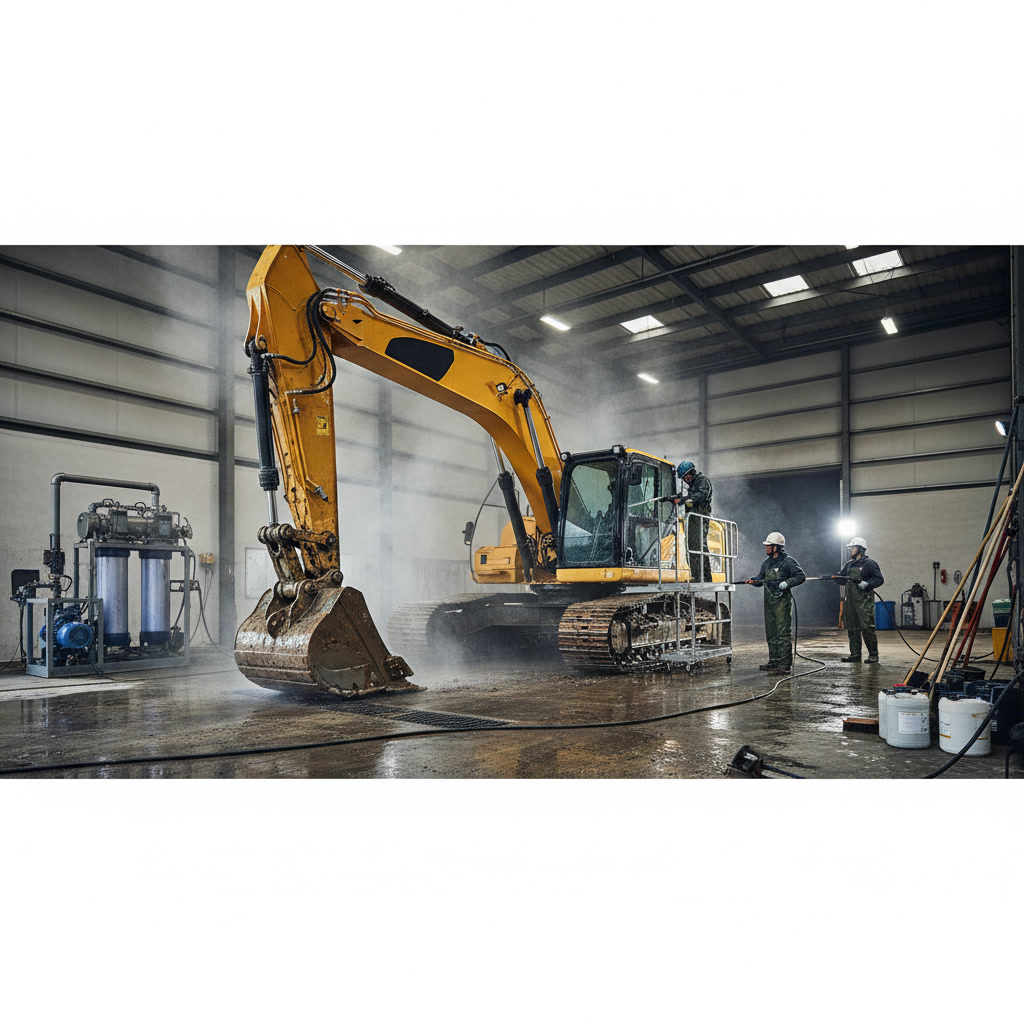
Professional heavy equipment cleaning involves a systematic process that starts with a detailed inspection of your machinery and concludes with a thorough final detailing to restore its appearance and function. Trained technicians assess the equipment type, surface conditions, and contamination levels before selecting specialized cleaning methods, pressure settings, and eco-friendly detergents tailored to each machine. The entire process typically takes between two and six hours depending on equipment size and condition, ensuring every component receives appropriate attention without damage to sensitive parts.
Why Heavy Machinery Requires Specialized Cleaning Expertise
Construction equipment, agricultural machines, and industrial vehicles accumulate layers of grease, oil, mud, concrete residue, and chemical buildup that standard washing methods cannot address effectively. These contaminants reduce equipment efficiency, hide potential maintenance issues, and accelerate corrosion if left untreated. Professional technicians understand the metallurgy, hydraulic systems, and electrical components of various equipment types, allowing them to clean aggressively where needed while protecting vulnerable areas from water intrusion or excessive pressure.
The wrong approach can force water into sealed bearings, damage hydraulic seals, or strip protective coatings from critical surfaces. Equipment worth tens or hundreds of thousands of dollars demands expertise that goes beyond residential pressure washing services to prevent costly repairs and downtime.
Understanding Equipment Cleaning Versus Standard Washing Methods
Heavy equipment cleaning differs fundamentally from washing homes, driveways, or vehicles. Industrial machinery features complex geometries with tight spaces, multiple material types, and components that require different treatments. A single excavator might include painted steel, chrome hydraulic cylinders, rubber hoses, electrical connections, glass, and exposed metal surfaces, each demanding specific pressure levels and cleaning agents.
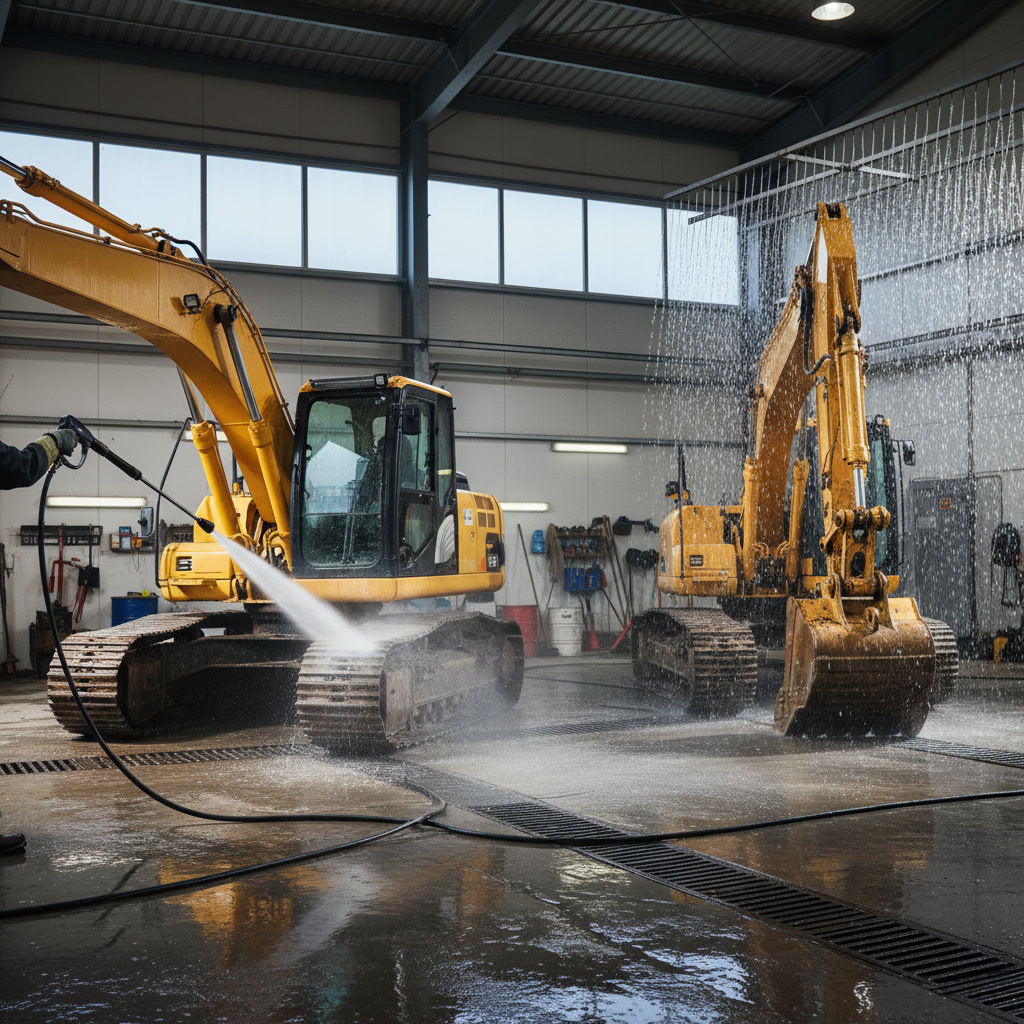
Temperature control also plays a crucial role. Hot water cleaning, often exceeding 200 degrees Fahrenheit, breaks down petroleum-based contaminants far more effectively than cold water alone. Professional services invest in truck-mounted hot water systems that maintain consistent temperatures throughout the cleaning process, something impossible with standard pressure washers.
The Initial Inspection and Assessment Phase
Every heavy equipment cleaning job begins with a comprehensive walk-around inspection. Technicians document the current condition, identify problem areas, and note any pre-existing damage to avoid liability disputes. This inspection reveals the type and severity of contamination, helping determine which cleaning methods will prove most effective.
During this phase, professionals identify areas requiring special attention, such as engine compartments with heavy grease buildup, undercarriages caked with dried mud and clay, or tracks filled with compacted debris. They also mark sensitive areas like air intakes, electrical panels, and delicate sensors that need protection during the cleaning process. This assessment typically takes 10 to 15 minutes but saves hours by preventing mistakes and ensuring the right equipment arrives on site.
Pre-Treatment and Degreasing Application
Once the assessment is complete, technicians apply industrial-grade degreasers and pre-treatment solutions to break down stubborn contaminants. These specialized chemicals are pH-balanced and biodegradable, formulated to dissolve petroleum products, hydraulic fluids, and mineral deposits without harming painted surfaces or rubber components.
The pre-treatment solution needs dwell time to work effectively, typically between five and 15 minutes depending on contamination severity. During this waiting period, technicians prepare their pressure washing equipment, adjust water temperature settings, and select appropriate nozzles for different surfaces. Proper pre-treatment reduces the mechanical agitation needed during washing, which minimizes wear on equipment surfaces and speeds the overall cleaning process.
High-Pressure Washing of Main Surfaces in Patchogue
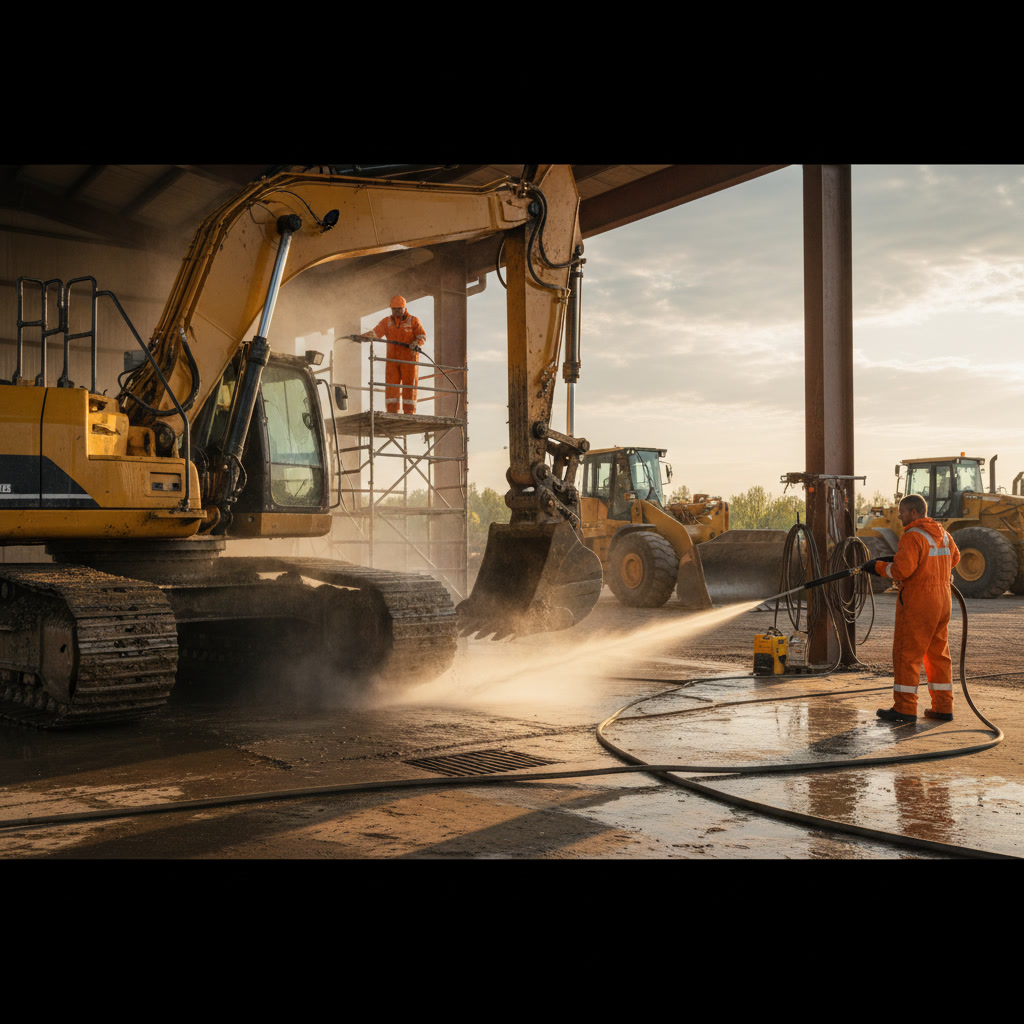
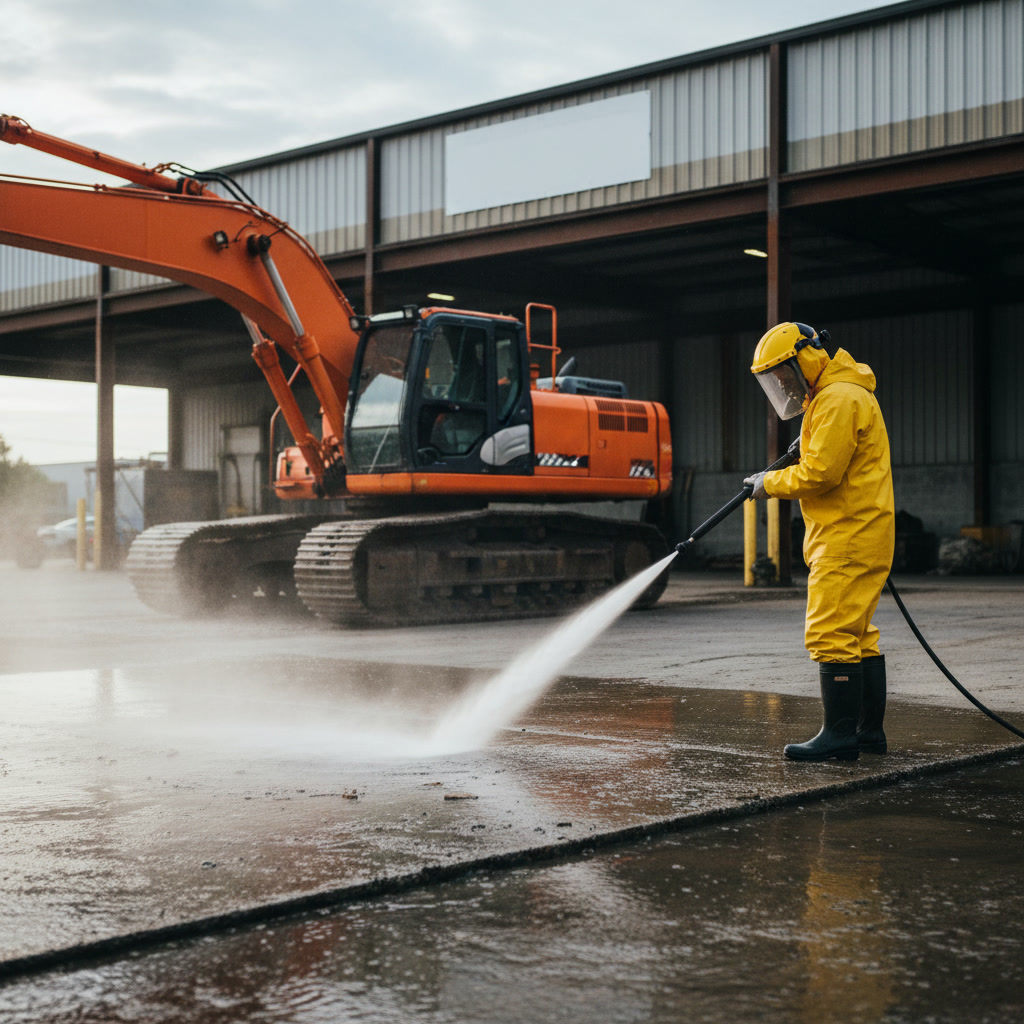
The main washing phase uses commercial-grade pressure washers delivering between 3,000 and 4,000 PSI combined with hot water to remove loosened contaminants. Technicians work systematically from top to bottom, ensuring dirty runoff doesn’t re-contaminate already cleaned areas. They adjust pressure settings based on surface type, using lower pressures on painted panels and higher pressures on steel frames and undercarriages.
Experienced cleaners maintain the proper distance between the spray nozzle and equipment surfaces, typically 12 to 18 inches, to maximize cleaning power without causing damage. They use rotating turbo nozzles for flat surfaces and adjustable fan tips for detailed work around hinges, joints, and mechanical components. This phase requires constant attention to detail and thorough knowledge of equipment construction to avoid forcing water into sensitive areas.
Detail Cleaning of Hard-to-Reach Areas
After the main surfaces are clean, technicians focus on areas that standard washing misses. Undercarriages, wheel wells, track assemblies, and engine compartments require specialized tools and techniques. Extension wands reach deep into chassis frames, while precision nozzles clean around hydraulic cylinders and pivot points without damaging seals.
This detail work separates professional services from amateur attempts. A backhoe’s boom assembly, for example, has dozens of grease fittings, pivot pins, and hydraulic lines that trap debris and require individual attention. Technicians often use combination approaches, alternating between pressure washing and hand brushing to ensure complete cleaning without forcing contaminants deeper into mechanical assemblies.
Step-by-Step Undercarriage and Track Cleaning Process
The undercarriage presents the greatest cleaning challenge on most heavy equipment. This area accumulates the densest layers of compacted soil, clay, and debris that can weigh hundreds of pounds on larger machines. Professional cleaners follow a systematic approach:
- Remove large debris chunks manually or with air tools to prevent clogging drainage systems
- Apply penetrating degreasers specifically formulated for undercarriage contamination
- Use rotating surface cleaners on flat undercarriage panels to ensure even cleaning
- Direct high-pressure streams at 45-degree angles to dislodge compacted material from crevices
- Inspect track tension mechanisms, sprockets, and idlers for remaining debris
- Re-treat stubborn areas with additional degreaser and repeat washing
Track-type equipment requires extra attention to remove materials wedged between track pads and links. Debris left in these areas accelerates wear on expensive track components and can cause tracking problems. Similar detailed approaches apply to wheeled equipment, where brake assemblies and suspension components hide contamination that affects performance and safety.
Engine Compartment and Mechanical Component Care
Engine compartments demand the most careful approach during equipment cleaning. While these areas benefit greatly from removing accumulated grease and oil, they contain electrical components, air filters, and sensitive sensors that water can damage. Professional technicians protect vulnerable parts with plastic sheeting and tape before applying controlled amounts of degreaser.
They use lower pressure settings, typically 1,500 to 2,000 PSI, and wider spray patterns to clean engine blocks, radiators, and accessory drives without forcing water past gaskets and seals. After washing, compressed air removes water from electrical connections and crevices where moisture could cause corrosion. This careful approach maintains the equipment’s reliability while achieving thorough cleaning results that make maintenance inspections far easier.
The Rinse and Water Recovery Process
After all cleaning and detail work is complete, technicians perform a comprehensive rinse using clean water to remove all chemical residues. This step is essential because leftover cleaning agents can attract dirt or cause surface discoloration over time. The rinse also reveals any areas that need additional attention before moving to the drying phase.
Professional services often include water recovery systems that capture, filter, and properly dispose of contaminated runoff. This practice protects the environment and complies with local regulations regarding industrial wastewater. Equipment cleaned at dedicated facilities drains over collection pits, while mobile services use containment mats and vacuum recovery systems to prevent contamination of storm drains and groundwater.
Final Detailing and Protective Treatments
The final detailing phase transforms clean equipment into machinery that looks nearly new. Technicians use compressed air to blow water from every crevice, preventing rust formation in hidden areas. They wipe down glass surfaces, mirrors, and operator cabs to remove water spots and streaks. Chrome hydraulic cylinders receive special attention, as water stains on these surfaces can lead to pitting and premature seal failure.
Many professional services offer optional protective treatments during this phase. Corrosion inhibitors sprayed on bare metal surfaces provide weeks or months of rust protection. Tire and rubber dressings prevent UV damage and cracking. Painted surfaces can receive polymer sealants that make future cleaning easier and protect the finish from environmental damage. These treatments add minimal cost but extend the time between cleanings and preserve equipment value.
Keeping Your Investment Looking and Running Better
Regular professional cleaning does more than improve appearance. Clean equipment runs cooler because radiators and cooling fins operate at full efficiency. Hydraulic systems last longer when contaminants don’t work their way past seals and into cylinders. Operators take better care of equipment that looks well-maintained, and potential buyers pay premium prices for machinery with documented cleaning and maintenance histories.
The process from inspection through final detailing ensures every component receives appropriate treatment, removing years of accumulated contamination without causing damage. Whether you operate construction equipment, agricultural machinery, or commercial vehicles, professional cleaning protects your investment and reduces total cost of ownership.
JV Power Washing INC brings over 20 years of experience cleaning heavy equipment throughout Long Island. Our licensed and insured technicians use commercial-grade equipment and proven processes to deliver results that meet the highest standards. We serve contractors, municipalities, and equipment owners who demand thorough cleaning without the risks that come from inexperienced operators. Contact us at +16312868932 to schedule your equipment cleaning and see the difference professional service makes.