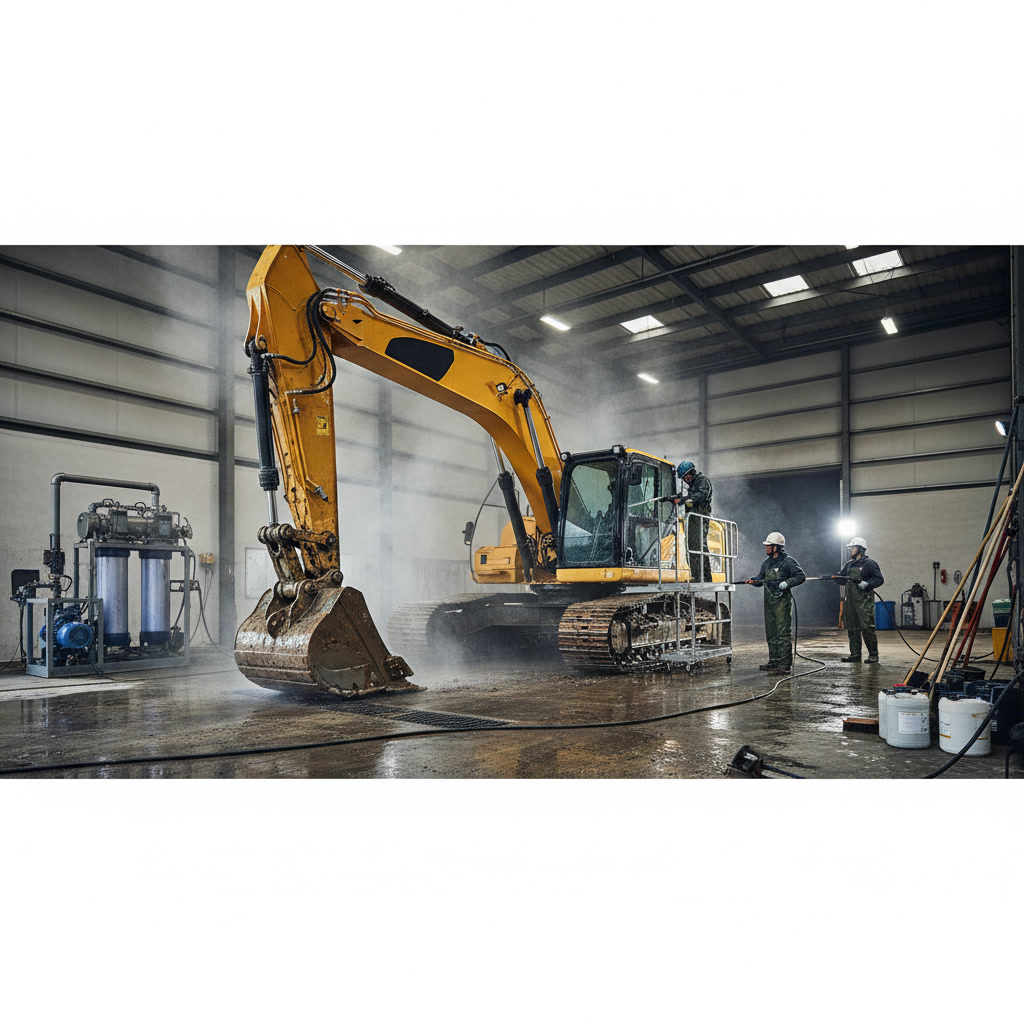
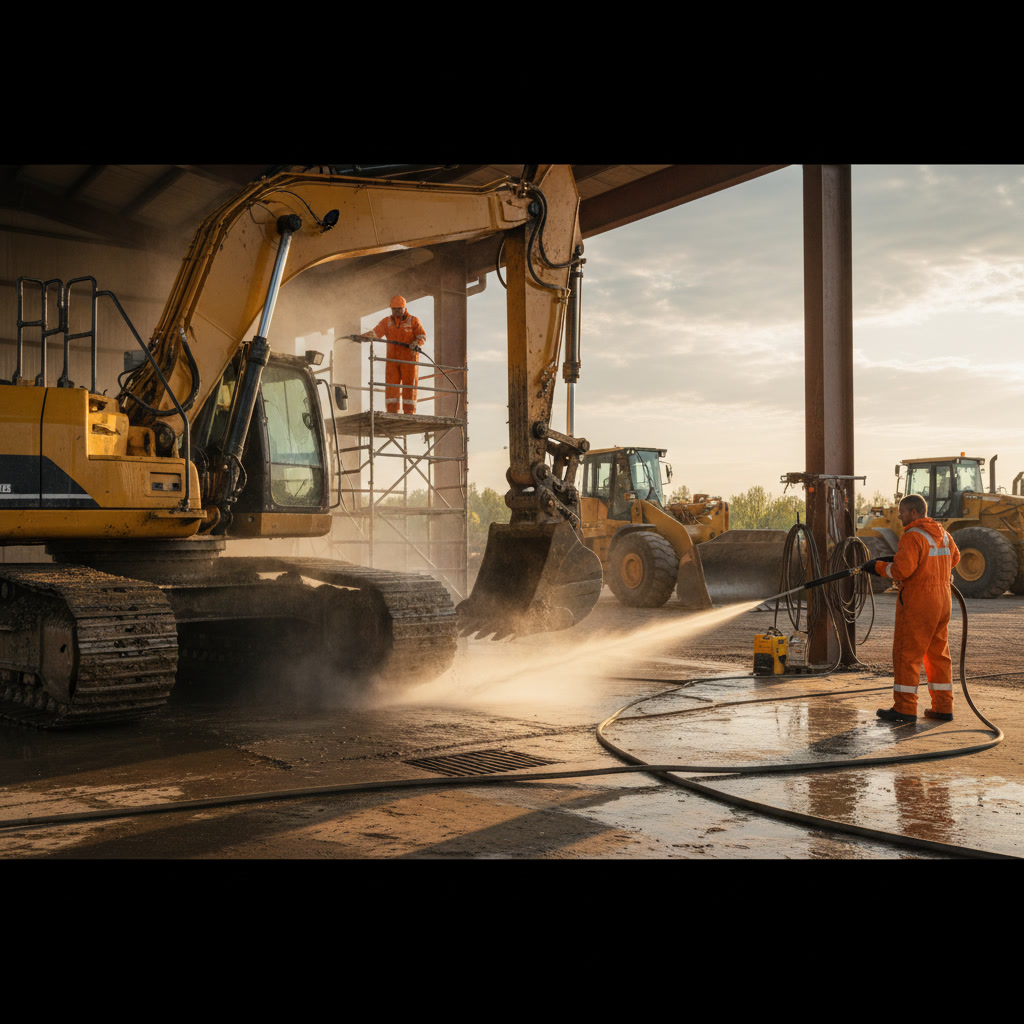
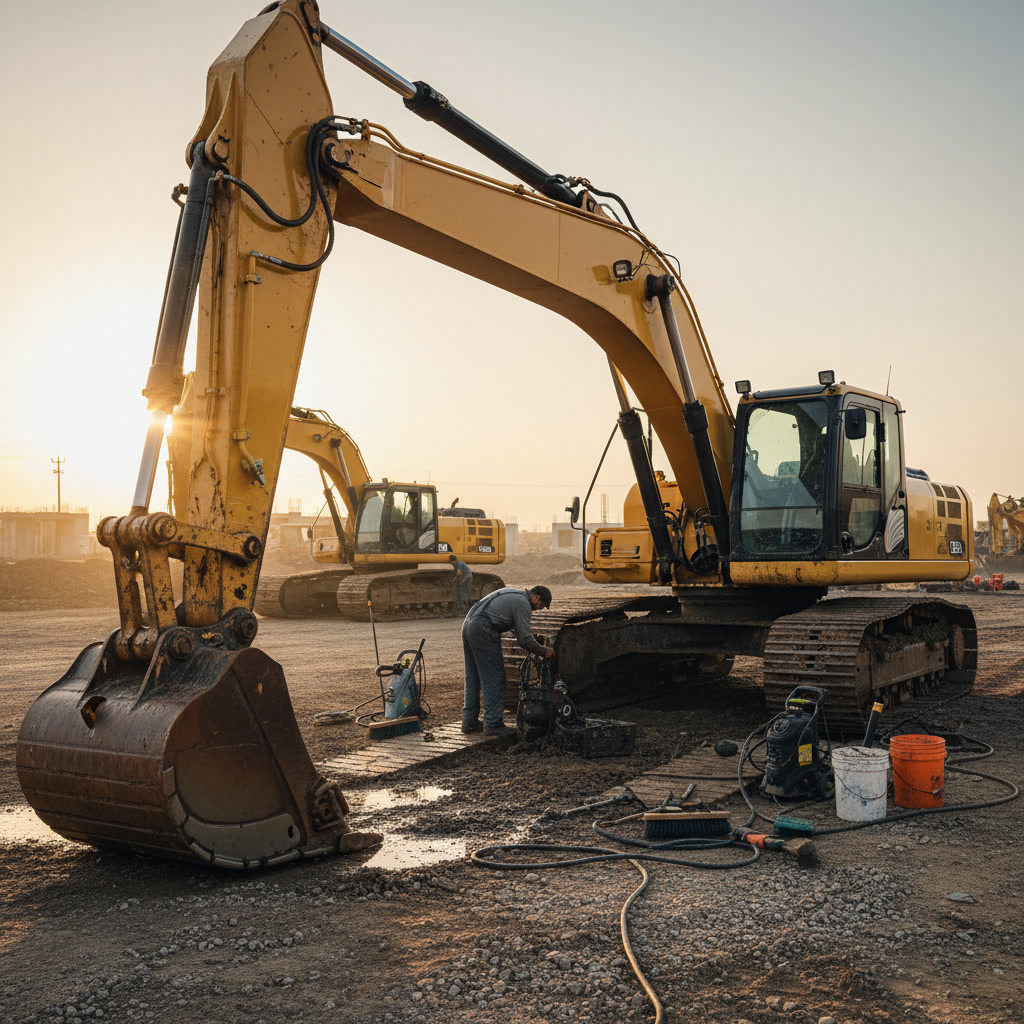
Heavy equipment cleaning prevents rust by removing salt, dirt, chemicals, and moisture that accelerate corrosion on metal surfaces. Regular washing eliminates abrasive particles that wear down hydraulic seals, bearings, and moving parts, while also allowing operators to spot early signs of mechanical failure during visual inspections. Construction equipment that receives consistent professional cleaning typically lasts 30-40% longer than neglected machines.
Why Construction Equipment Faces Unique Corrosion Challenges
Construction sites expose heavy machinery to harsh conditions every single day. Excavators, bulldozers, and loaders operate in environments filled with soil containing corrosive minerals, salt from coastal areas or winter roads, and chemical compounds from concrete or asphalt work. These materials cling to metal surfaces and trap moisture against the equipment.
The combination of moisture and contaminants creates an electrochemical reaction that breaks down protective paint and metal coatings. Once the base metal becomes exposed, oxidation begins rapidly. A single scratch in the paint can spread into a fist-sized rust patch within months if left unchecked.
Coastal construction operations face even greater challenges. Salt spray from ocean air accelerates corrosion at rates five times faster than inland environments. Equipment working near the water needs more frequent cleaning to maintain structural integrity and prevent expensive repairs.
The Hidden Cost of Dirt Buildup on Patchogue Construction Sites
Dirt does more than make equipment look neglected. Mud and debris trap heat against engine components, radiators, and hydraulic systems, forcing these parts to work harder and wear out faster. A clogged radiator covered in dried mud can cause an engine to overheat, leading to warped cylinder heads or blown gaskets that cost thousands to repair.
Abrasive particles act like sandpaper on moving parts. Grit that works its way into hydraulic cylinders scores the precision-machined surfaces, creating leaks that reduce lifting capacity and contaminate hydraulic fluid. The repair bill for replacing damaged cylinders often exceeds the cost of years of preventive cleaning.
Accumulated grime also conceals mechanical problems until they become catastrophic. Oil leaks, cracked hoses, loose bolts, and damaged wiring remain invisible under layers of dirt. Regular heavy equipment cleaning transforms routine washing into a visual inspection opportunity that catches small issues before they cause breakdowns.
How Rust Progresses From Surface Stains to Structural Failure
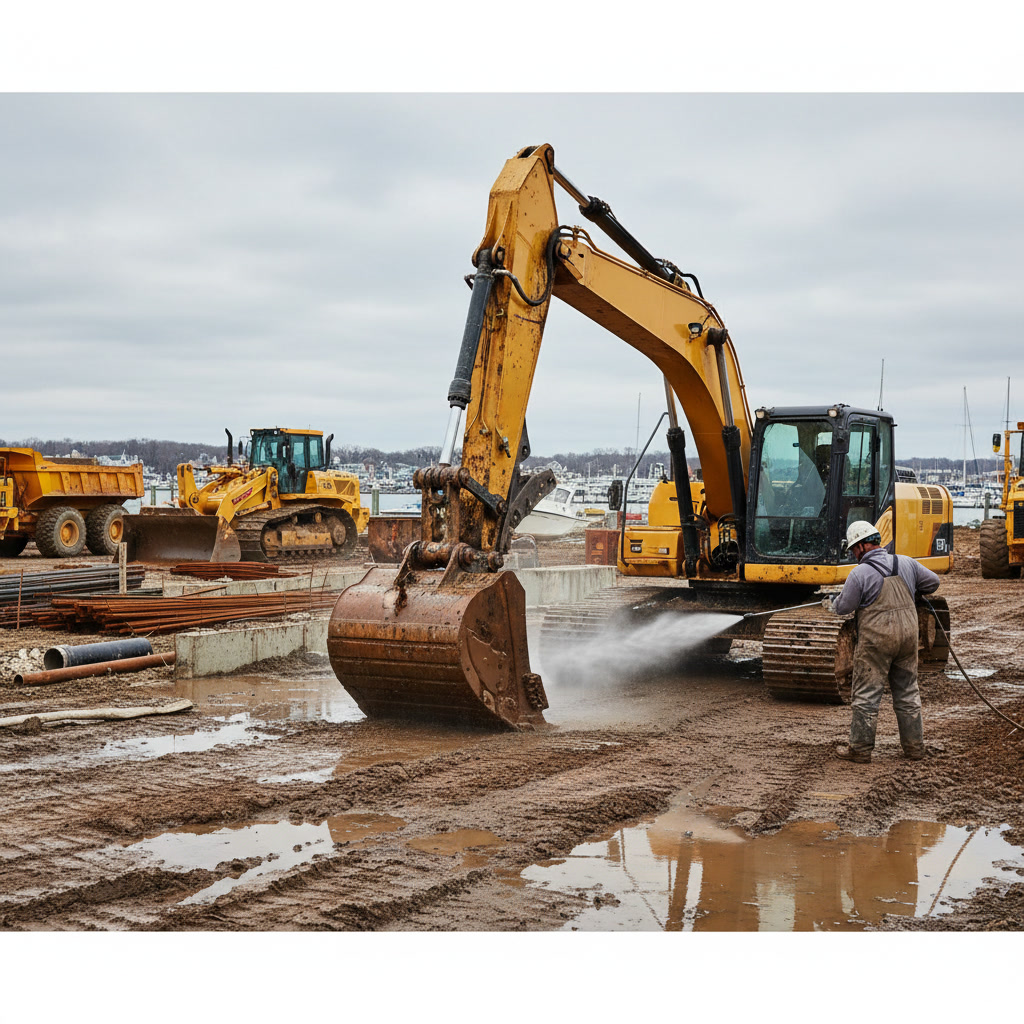
Rust formation follows predictable stages that professional cleaning can interrupt. Surface rust appears first as a reddish-brown discoloration on bare metal or damaged paint. At this stage, removal takes minimal effort with proper washing techniques and the right cleaning solutions.
If left untreated, surface rust develops into scale rust where oxidation penetrates deeper into the metal. The affected area becomes rough and pitted, weakening the structural integrity of the component. Hydraulic arms, bucket teeth mounts, and undercarriage components lose load-bearing capacity as rust consumes the metal.
The final stage is penetrating rust that eats completely through metal panels, frames, and structural members. Boom arms can crack under load, chassis rails can buckle, and safety-critical components can fail without warning. Replacing an entire boom assembly or chassis costs tens of thousands of dollars, far exceeding the investment in preventive cleaning programs.
Critical Areas Where Corrosion Causes Mechanical Failure
Certain equipment zones require extra attention during cleaning because they directly affect mechanical function. The undercarriage takes constant abuse from rocks, mud, and standing water. Track frames, rollers, and idlers corrode quickly when debris traps moisture against the metal overnight.
Hydraulic cylinders represent another vulnerable system. Road salt or chemical exposure can pit the chrome-plated cylinder rods, destroying the seal integrity. Once seals fail, hydraulic fluid leaks out while allowing dirt to enter the system. The contaminated fluid then damages pumps, valves, and motors throughout the entire hydraulic circuit.
Electrical connections and wiring harnesses suffer from corrosion that creates intermittent failures and diagnostic nightmares. Green corrosion on battery terminals increases electrical resistance, preventing engines from starting. Corroded sensor connections send false readings to computer systems, triggering error codes and reducing engine performance.
Professional Cleaning Methods That Protect Equipment Integrity
Not all cleaning approaches deliver equal protection. High-pressure power washing services work well for removing caked mud and heavy buildup from robust structural components. Water pressure between 2,500 and 3,500 PSI strips away contaminants without damaging paint or metal surfaces when used correctly.
Sensitive components like electrical panels, air intake systems, and computer modules require gentler methods. Low-pressure washing with specialized degreasers removes oil and grime without forcing water into sealed compartments. This approach prevents the cleaning process itself from causing water damage to electronics or bearings.
The water temperature also matters for effective cleaning. Hot water dissolves grease, oil, and hydraulic fluid residue far better than cold water alone. Professional equipment cleaning services heat water to 180-200 degrees Fahrenheit to break down petroleum-based contaminants that cold water simply pushes around.
Applying corrosion inhibitors after washing provides an extra layer of protection. These products create a temporary barrier that repels moisture and prevents rust formation between cleaning sessions. Regular application keeps exposed metal surfaces protected even in harsh conditions.
Cleaning Frequency Based on Operating Conditions
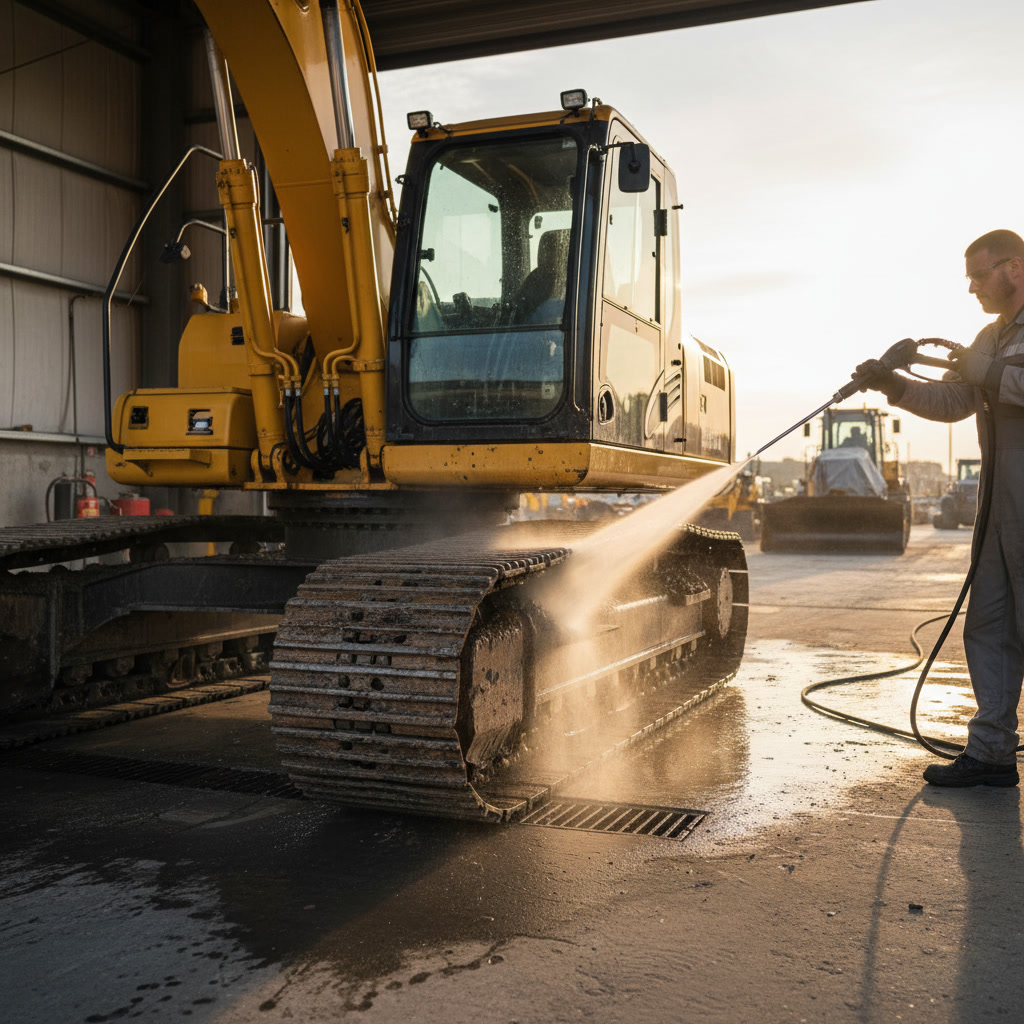
Equipment working in muddy or wet conditions needs weekly cleaning at minimum. Excavators digging foundation trenches or working in marshland should be washed after every shift if possible. The investment in daily cleaning pays for itself by preventing corrosion and allowing early detection of mechanical issues.
Machines operating in dusty environments require different attention. Dust becomes abrasive when it mixes with hydraulic fluid leaks or engine oil. Bi-weekly cleaning removes this grinding compound before it damages seals and bearings. Air filters also need more frequent inspection and cleaning in dusty conditions.
Winter operations demand the most aggressive cleaning schedules. Road salt and de-icing chemicals attack metal with exceptional speed. Equipment exposed to salt should be washed weekly, with special attention to the undercarriage and areas where slush accumulates. Waiting until spring to clean off winter salt guarantees expensive rust damage.
The Five-Step Process for Maximum Corrosion Protection
Effective equipment cleaning follows a systematic approach. First, pre-rinse the entire machine to remove loose dirt and soften caked-on mud. This initial rinse prevents scratching the paint when applying brushes or high-pressure spray during the main wash.
Second, apply a specialized degreaser to engine compartments, hydraulic systems, and undercarriage components. Allow the chemical to dwell for five to ten minutes to break down oil and grease. Professional-grade degreasers work faster and rinse cleaner than consumer products.
Third, pressure wash the entire machine systematically from top to bottom. Start with the cab and upper structures, then move to the boom and hydraulics, and finish with the undercarriage. This sequence prevents clean areas from being contaminated by runoff from dirty sections.
Fourth, inspect all components during the rinse phase. Look for oil leaks, damaged hoses, loose fittings, worn pins, and early rust formation. This visual inspection catches problems while they remain inexpensive to fix. Many operators discover that similar inspection opportunities occur during other professional cleaning services for different equipment types.
Fifth, apply protective coatings to vulnerable areas. Spray exposed metal with corrosion inhibitor, lubricate moving parts, and treat rubber components with protectant. These finishing steps extend the protection period until the next scheduled cleaning.
How Clean Equipment Reduces Downtime and Repair Costs
Construction businesses lose an average of $1,500 per day for every piece of equipment sitting idle due to mechanical failure. A single rusted hydraulic cylinder or corroded electrical connection can shut down a $200,000 excavator for days while waiting for parts and repairs.
Regular cleaning prevents these catastrophic failures by eliminating the root causes of corrosion. Equipment that stays clean operates longer between major overhauls, maintains higher resale value, and spends more time generating revenue on job sites instead of sitting in repair shops.
The visual deterrent factor also matters. Clean equipment projects professionalism to clients and property owners. Contractors operating well-maintained machines win more bids because clients perceive them as detail-oriented and reliable. The same attention to equipment care suggests quality workmanship on construction projects.
Environmental Considerations for Equipment Washing
Professional heavy equipment cleaning services manage wastewater properly to prevent environmental violations. Runoff from construction equipment contains petroleum products, heavy metals, and sediment that cannot legally enter storm drains or natural waterways.
Proper cleaning operations capture and filter wastewater, removing contaminants before discharge. Some systems recycle wash water multiple times, reducing water consumption and disposal costs. These environmental protections matter increasingly as regulations tighten around construction site runoff.
Attempting to wash heavy equipment on unprepared surfaces risks regulatory fines and environmental damage. Professional services like concrete cleaning operations understand containment requirements and operate within environmental guidelines.
Seasonal Maintenance Strategies for Long Island Equipment
Equipment operating on Long Island faces seasonal corrosion challenges that demand adapted cleaning schedules. Spring cleaning removes accumulated winter salt and road chemicals before warm weather accelerates rust formation. This post-winter washing represents the single most important corrosion prevention step of the year.
Summer operations generate less corrosion risk but produce heavy dust and dirt buildup. Focus summer cleaning on maintaining visibility of mechanical components and preventing abrasive wear. Check cooling systems carefully since summer heat combined with clogged radiators causes most warm-weather breakdowns.
Fall preparation involves thorough cleaning before winter storage or before salt season begins. Apply extra corrosion protection to equipment that will sit idle through winter months. Machines continuing winter operations need pre-treatment with heavy-duty rust inhibitors on vulnerable undercarriage components.
Why Professional Service Delivers Better Results Than DIY Cleaning
Professional equipment cleaning brings specialized tools and expertise that typical construction companies lack in-house. Commercial pressure washers deliver consistent water temperature and pressure that consumer units cannot match. Professional operators also understand which cleaning agents work best for specific contaminants without damaging sensitive components.
The time savings matter significantly for busy contractors. A professional crew can deep-clean an excavator in 45 minutes, while an operator with a garden hose might spend three hours achieving inferior results. That time difference multiplies across an entire equipment fleet.
Safety represents another professional advantage. Working around heavy equipment with high-pressure water involves slip hazards, chemical exposure, and the risk of forcing water into dangerous areas. Companies like JV Power Washing INC carry liability insurance and train employees in safe cleaning procedures that protect both workers and expensive machinery.
Protecting Your Equipment Investment Through Regular Cleaning
Construction equipment represents a major capital investment that deserves protection through preventive maintenance. Regular professional cleaning extends equipment lifespan, maintains resale value, and prevents the catastrophic rust damage that leads to premature replacement. The modest cost of scheduled cleaning disappears compared to the expense of rebuilding corroded components or replacing failed machines.
Smart contractors recognize that equipment care directly impacts profitability. Clean machines break down less often, operate more efficiently, and present a professional image that attracts premium clients. The discipline of regular cleaning also creates opportunities to spot mechanical issues early, when repairs cost hundreds instead of thousands.
JV Power Washing INC provides professional heavy equipment cleaning throughout Long Island with 20-plus years of experience protecting construction machinery from rust and corrosion. Our team understands the specific challenges that local conditions create for your equipment and delivers the thorough cleaning that prevents mechanical failure. Call +16312868932 to schedule equipment cleaning service or visit our contact page to discuss a maintenance program tailored to your fleet.