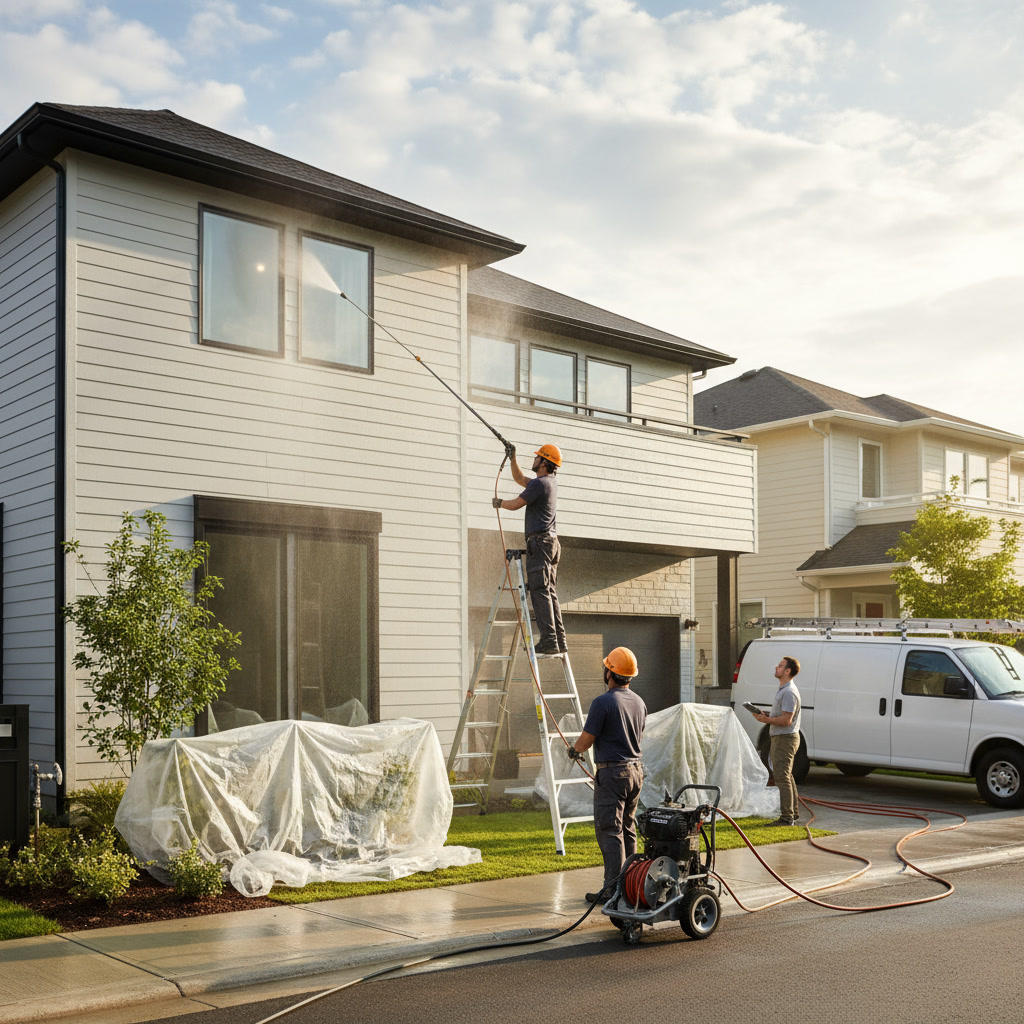
Professional exterior house washing follows a detailed exterior house washing process designed to protect your property while removing years of buildup. Technicians use specialized equipment and cleaning solutions to restore your home’s appearance without causing damage to siding, windows, or landscaping. Understanding each step helps you know what to expect and ensures you receive the quality service your home deserves.
Why a Structured Approach Matters for Exterior Cleaning
A systematic process separates professional work from amateur attempts. Trained technicians assess your home’s unique conditions before selecting the right cleaning method, pressure settings, and detergents. This approach prevents costly mistakes like water intrusion behind siding, damaged paint, or etched window glass.
Homes with vinyl, wood, stucco, or brick each require different handling. An experienced cleaner recognizes these differences during inspection and adjusts their technique accordingly. Skipping the assessment phase often leads to visible damage that becomes apparent only after the job is complete.
The Pre-Inspection Phase Sets the Foundation
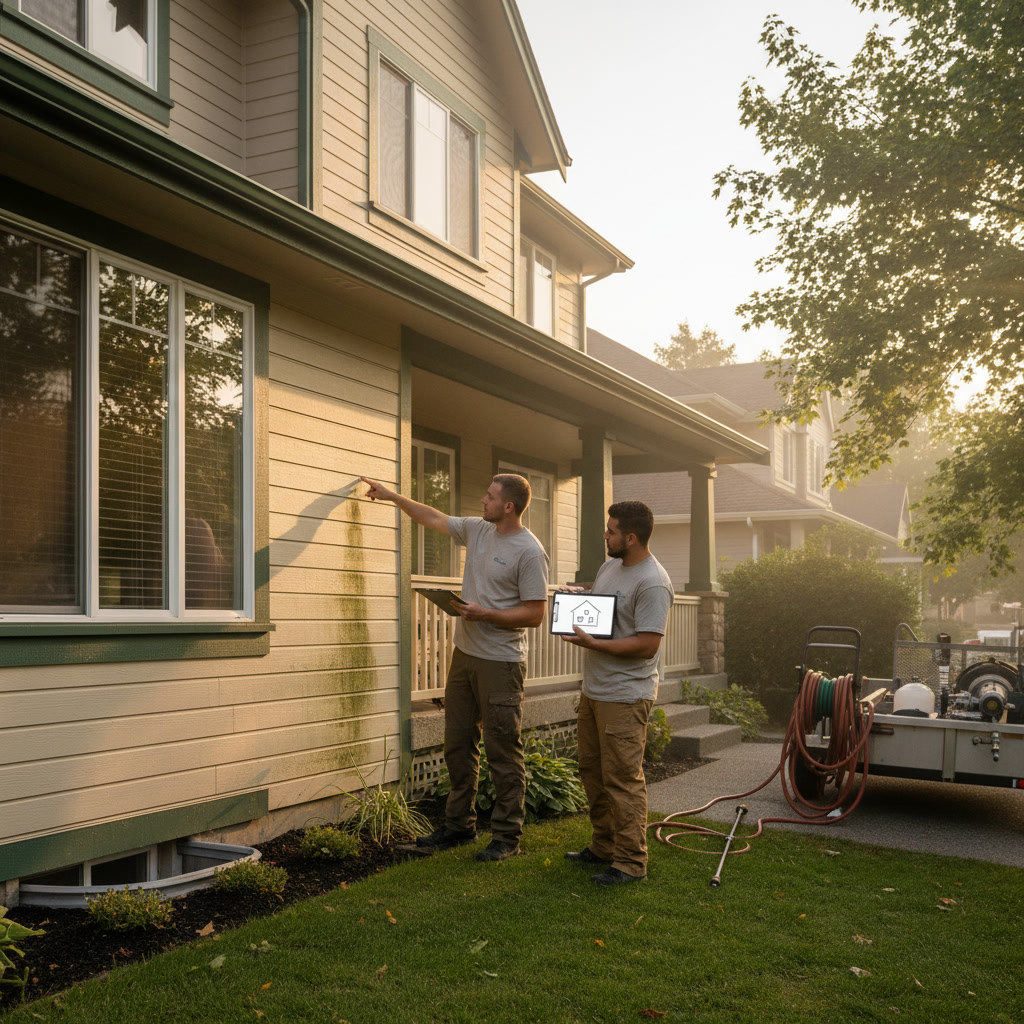
Before any water touches your home, a thorough walkthrough identifies existing damage, vulnerable areas, and special concerns. The technician examines your siding for cracks, loose panels, and areas where water could penetrate. They also check window seals, door frames, and any decorative trim that might be fragile.
During this phase, you have the opportunity to point out specific problem areas such as stubborn stains, mildew concentrations, or spots where previous cleaning attempts failed. The inspector documents these concerns and explains how they will be addressed. This conversation also covers which outdoor items need to be moved or protected, from patio furniture to delicate plants near the foundation.
Property Preparation Protects Your Investment
After inspection, the crew prepares the work area to prevent damage and ensure efficient cleaning. They close all windows and doors, then cover electrical outlets, light fixtures, and any ventilation openings. Landscaping near the house receives protective tarps or plastic sheeting, especially delicate shrubs and flower beds.
Outdoor furniture, grills, and decorative items are moved at least 10 feet from the house when possible. Hose bibs and exterior faucets are checked to ensure proper water supply. The team also sets up their equipment in a location that minimizes hose runs across lawns and walkways, reducing the risk of tripping hazards or turf damage.
Pre-Treatment Application Loosens Stubborn Contaminants
Most professional jobs begin with applying a specialized cleaning solution to the exterior surfaces. This pre-treatment contains surfactants and, when appropriate, mild biocides that break down organic growth like mildew, algae, and lichen. The solution needs time to work, typically 10 to 15 minutes depending on the product and temperature.
The application method varies based on the service being performed. Soft washing uses low-pressure spray tips to coat surfaces gently, while some situations call for brush application in heavily soiled areas. The cleaner avoids over-saturating areas near windows and doors where solution could seep inside.
The Main Washing Phase Removes Years of Buildup
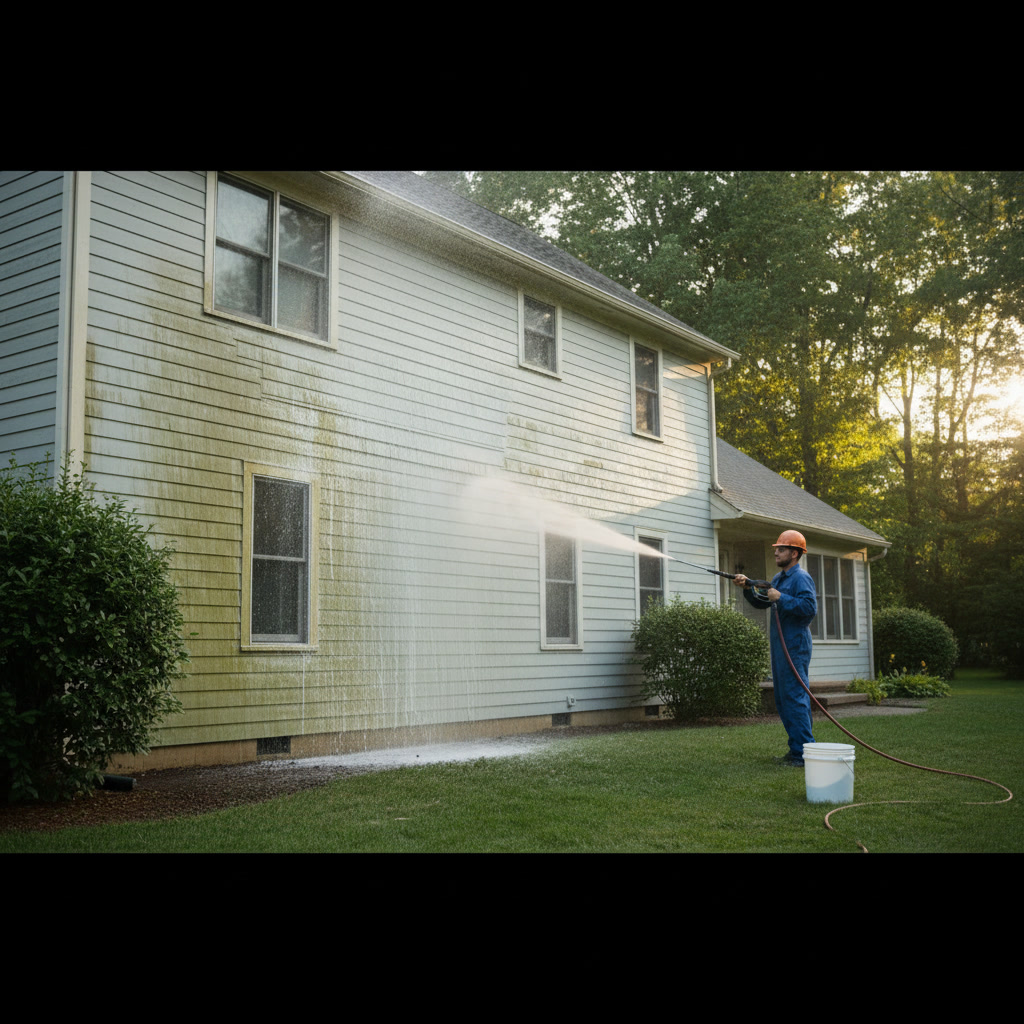
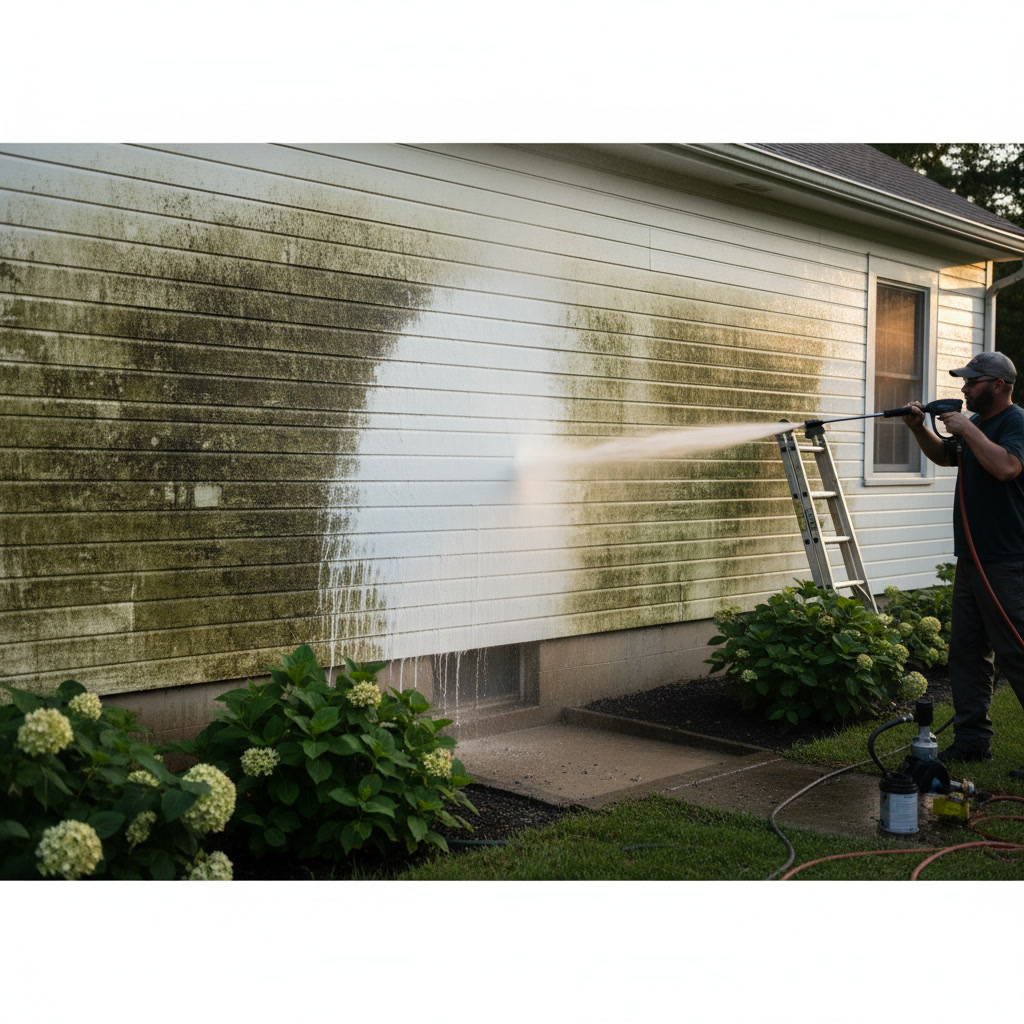
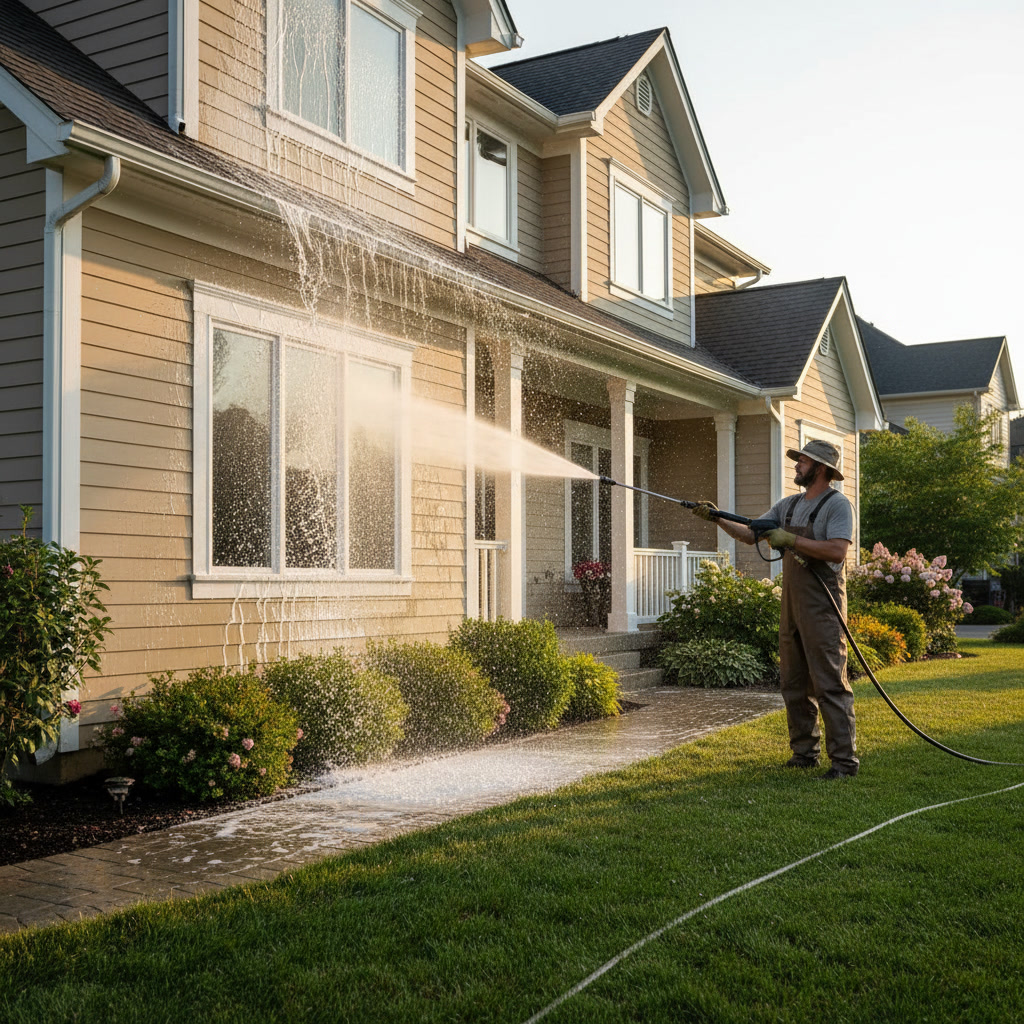
Once the pre-treatment has done its work, the actual washing begins. Technicians start from the top of the house and work downward, allowing dirty water to flow away from already-cleaned sections. Water pressure is carefully controlled, typically between 500 and 1,500 PSI for most residential siding, far lower than the settings used for concrete cleaning.
The spray wand is held at a consistent angle, usually 45 degrees, and kept 12 to 18 inches from the surface. This distance provides effective cleaning without forcing water behind siding or damaging the finish. Special attention goes to areas around windows, doors, and corners where dirt accumulates most heavily.
Experienced technicians recognize when a section needs additional treatment. They may reapply solution to particularly stubborn stains or adjust their technique for areas with different materials. The goal is uniform cleanliness across the entire exterior, not just acceptable results in easy-to-reach spots.
Detailed Work on High-Value Areas in Patchogue Homes
Certain parts of your home require extra care and precision. Soffits and fascia boards often harbor wasp nests and heavy spider web accumulation that needs gentle removal before washing. These areas are typically painted wood or aluminum, both of which can be damaged by excessive pressure.
Window frames and glass receive careful attention to remove mineral deposits and oxidation without scratching. The technician angles the spray away from the seals between glass and frame to prevent water intrusion. Shutters, if present, are cleaned on both sides and checked to ensure they remain securely fastened.
Entry areas like porches and covered walkways get detailed cleaning because they create your home’s first impression. These zones often have textured ceilings that trap dust and cobwebs, requiring a combination of brushing and low-pressure rinsing.
Comparing Pressure Washing to Soft Washing Techniques
The exterior house washing process differs significantly based on which method the technician employs. Traditional pressure washing relies primarily on water force to remove contaminants, making it ideal for durable surfaces like brick and concrete but risky for delicate materials.
Soft washing, in contrast, uses chemical action to do most of the cleaning work. This method applies cleaning solutions at low pressure, then rinses them away gently. The result is longer-lasting cleanliness because the treatment kills organic growth at its root rather than just blasting it off the surface.
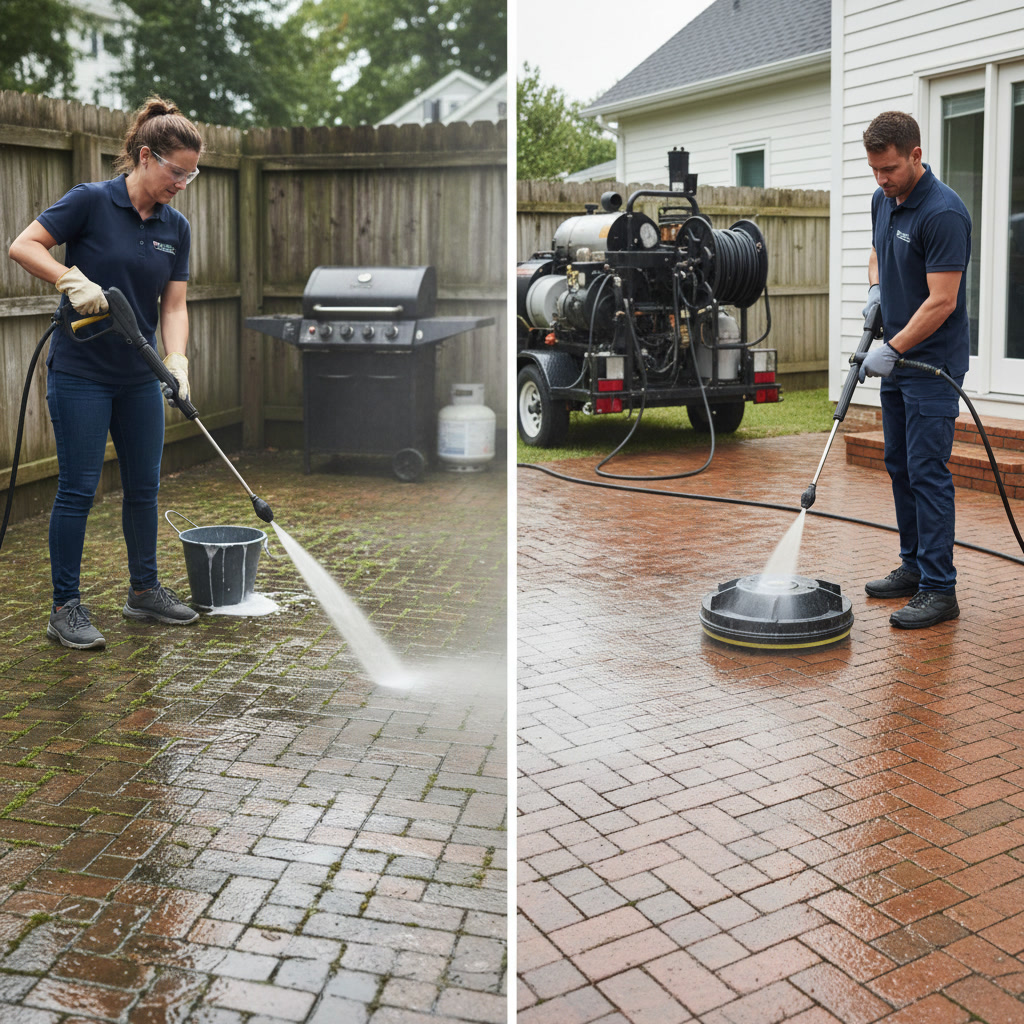
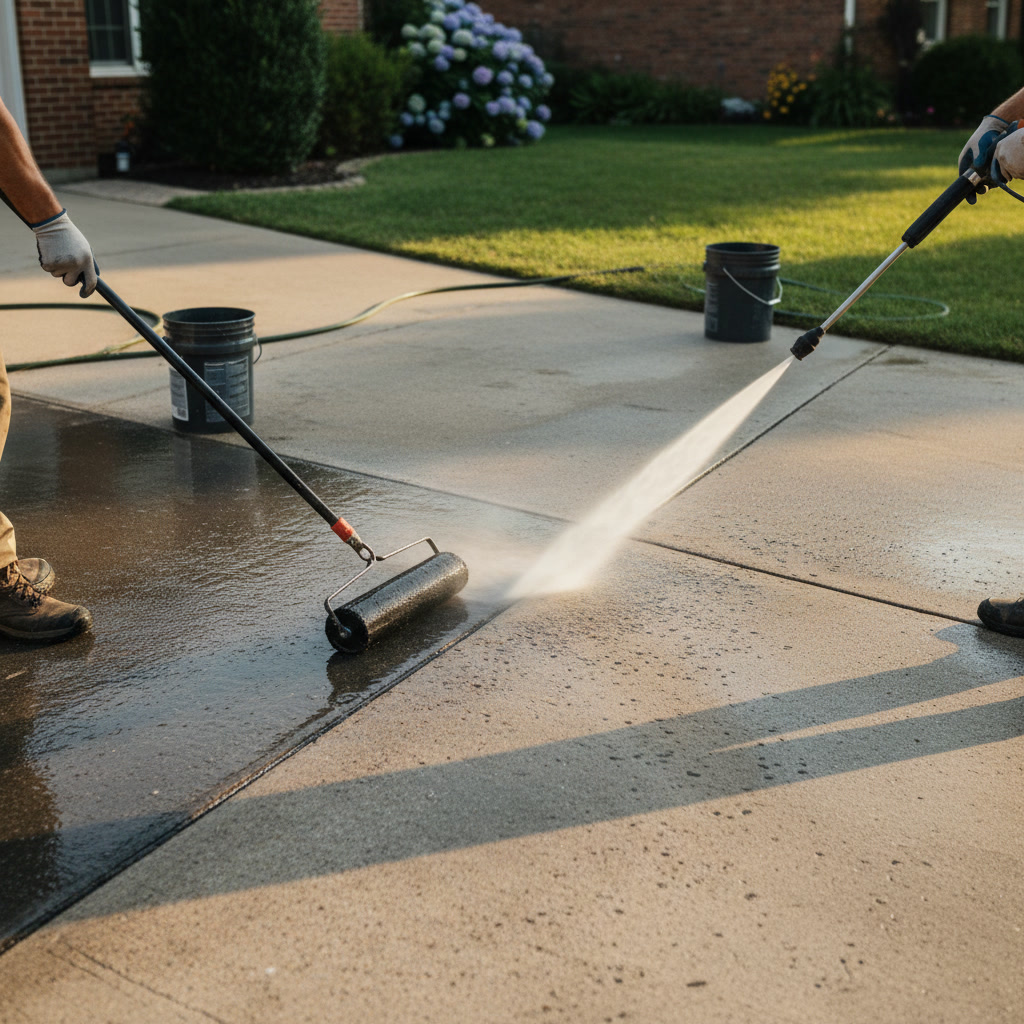
Professional services from companies like JV Power Washing INC typically combine both approaches on a single job. They use soft washing on siding and painted surfaces while employing higher pressure for walkways and foundation areas. This hybrid approach delivers thorough cleaning while minimizing risk to your property.
Post-Wash Rinse Ensures Complete Cleaning Solution Removal
After the main cleaning phase, a thorough rinse removes all traces of cleaning solution from your home’s exterior. Residual chemicals can leave streaks, attract dirt, or cause discoloration if not completely flushed away. The rinse process uses clean water at low pressure, starting again from the top and working downward.
Windows receive extra rinsing to prevent spotting, and any areas where solution pooled get special attention. The technician checks for suds or foam in runoff water, continuing the rinse until the water runs completely clear. This step also reveals any spots that need additional cleaning, allowing the crew to address them before moving to the next phase.
Property Restoration and Cleanup Leave No Trace
Once washing is complete, the crew removes all protective coverings from landscaping and fixtures. They inspect plants for any signs of stress from cleaning solution exposure and rinse them thoroughly if needed. Furniture and decorative items are returned to their original positions.
The team collects all equipment, hoses, and materials from your property. They check for any items that may have been displaced during the work and restore them. Any debris that washed off the house, such as leaves or loose paint chips, is collected and disposed of properly.
The Final Walkthrough Confirms Quality Results
Before the crew leaves your property, a final inspection ensures every area meets professional standards. The lead technician walks the entire perimeter with you, pointing out the improvements and checking that you are satisfied with the results. This is your opportunity to identify any missed spots or areas that need additional attention.
Professional companies stand behind their work and will address any concerns immediately while their equipment is still on site. This walkthrough also includes care recommendations, such as how long to wait before applying new paint or when to schedule your next cleaning to maintain the fresh appearance.
The technician may also point out any damage discovered during the work that requires repair, such as cracked caulking or loose siding that could lead to bigger problems if not addressed. These observations provide valuable maintenance insights that help you protect your investment.
Maintaining Your Freshly Cleaned Exterior
A professional exterior wash typically lasts 12 to 24 months depending on your home’s exposure to elements and surrounding vegetation. Homes shaded by trees or located in humid areas may need more frequent service to prevent organic growth from returning. Regular maintenance through exterior cleaning services extends the life of your siding and paint, preventing the need for costly replacements.
Between professional cleanings, you can spot-clean small areas with a garden hose and mild detergent. Address any new stains or mildew growth promptly before they spread. Trim back vegetation that touches your siding, as constant contact promotes moisture retention and accelerates deterioration.
Understanding the complete process from pre-inspection to final walkthrough helps you recognize quality service when you receive it. Each step serves a specific purpose in protecting your property while delivering the dramatic visual improvement you expect. JV Power Washing INC follows this systematic approach on every project, ensuring consistent results backed by more than 20 years of experience.
If your home’s exterior shows signs of dirt, organic growth, or discoloration, a professional cleaning restores its appearance and protects your investment. Contact our team at +16312868932 to schedule an inspection and receive a detailed estimate for bringing your property back to its original beauty.