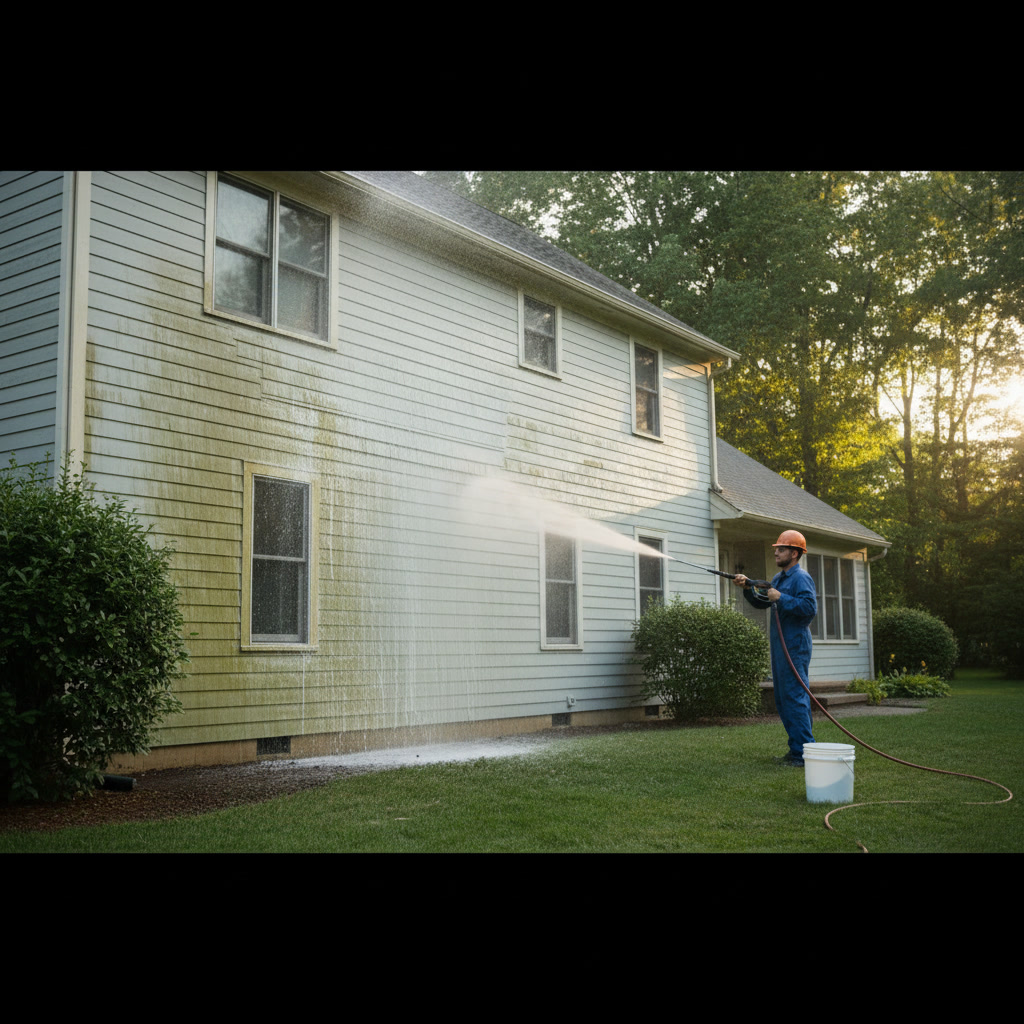
Regular exterior cleaning removes contaminants that break down paint and siding, helping your home maintain its protective finish and structural integrity for years longer than neglected surfaces. The simple act of removing dirt, mold, algae, and pollutants prevents chemical reactions that erode coatings and deteriorate materials. When you understand how exterior cleaning extends paint life, you can save thousands of dollars on premature repainting and siding replacement while keeping your home looking newer for much longer.
Most homeowners wait until their exterior looks visibly dirty before considering a cleaning, but by then, damage has already begun. The contaminants sitting on your surfaces are actively eating away at protective finishes every single day. Understanding this invisible damage is the first step toward better home maintenance.
Why Paint and Siding Deteriorate Faster Without Regular Cleaning
Paint and siding materials face constant assault from environmental contaminants. Mold, mildew, algae, and airborne pollutants land on surfaces and create colonies that feed on organic materials in paint binders and siding coatings. These organisms produce acidic byproducts that chemically attack the finish, breaking down the molecular bonds that hold paint together.
Salt air, industrial fallout, vehicle exhaust, and pollen create a layer of grime that traps moisture against your surfaces. This trapped moisture accelerates oxidation and allows biological growth to flourish. Even in areas without heavy industrial pollution, normal atmospheric dirt mixed with morning dew creates the perfect environment for material breakdown.
The Chemical Process That Breaks Down Your Home’s Protective Finish
Paint contains resins, pigments, and additives designed to create a waterproof barrier. When contaminants settle on this barrier, they begin a slow chemical reaction. Mold and algae secrete enzymes that digest organic compounds in the paint resin, creating microscopic pits and weakening the coating’s adhesion to the substrate.
Oxidation occurs when UV light interacts with contaminated surfaces. The dirt particles act as catalysts, speeding up the breakdown of paint binders and causing chalking, where the paint surface turns powdery. This process happens much faster on dirty surfaces than on clean ones because the contaminants absorb and concentrate heat, accelerating the chemical degradation.
Vinyl and aluminum siding face similar threats. The protective coatings on these materials break down when biological growth takes hold, leading to discoloration, brittleness, and eventual cracking. Wood siding suffers the most severe damage, as moisture trapped beneath dirt layers penetrates the wood fibers, causing rot and structural damage.
How Professional Exterior Cleaning in Patchogue Removes Harmful Contaminants
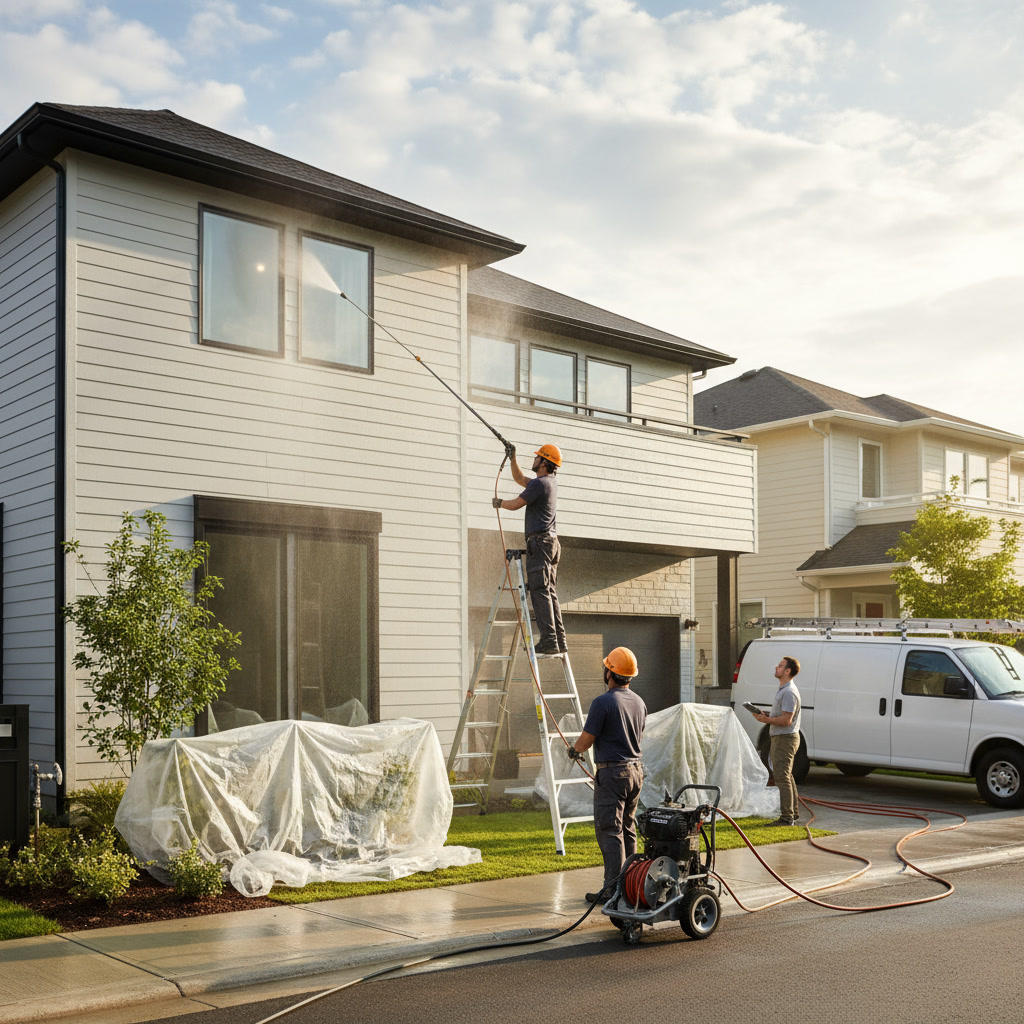
Professional cleaning removes the full spectrum of damaging substances that homeowners cannot address with garden hoses alone. The key lies in using the right pressure, cleaning solutions, and techniques for each surface type. Too much pressure damages paint and siding, while too little leaves contaminants behind.
Soft washing uses low-pressure water combined with specialized cleaning solutions that kill biological growth at the root level. This method is particularly effective for painted surfaces and delicate siding materials because it eliminates contaminants without the mechanical stress of high pressure.
The cleaning solutions used by professionals contain surfactants that break the bond between contaminants and the surface, along with biocides that kill mold, mildew, and algae spores. This prevents regrowth for months or even years after cleaning. The process also neutralizes acidic byproducts left behind by biological growth, stopping ongoing chemical damage.
Specific Ways Cleaning Extends Different Siding Material Lifespans
Vinyl siding typically lasts 20 to 40 years, but regular cleaning can push performance toward the upper end of that range. Removing contaminants prevents the breakdown of plasticizers in the vinyl, which keeps the material flexible and resistant to cracking. Clean vinyl also maintains its color better because the protective UV coating remains intact.
Wood siding benefits most dramatically from regular cleaning. Moisture trapped under dirt layers causes wood fibers to swell and contract repeatedly, leading to splitting and paint failure. Annual cleaning removes this moisture trap and allows wood to breathe properly, potentially doubling the time between paint jobs from five years to ten or more.
Fiber cement siding is extremely durable but still benefits from cleaning. Biological growth on fiber cement can penetrate the surface layer, causing staining that becomes permanent if left too long. Regular cleaning prevents this penetration and maintains the factory finish much longer than neglected surfaces.
Aluminum siding oxidizes when dirt and moisture sit on the surface. This oxidation appears as chalky residue and permanently dulls the finish. Cleaning before oxidation becomes severe preserves the original luster and prevents the need for expensive refinishing.
The Five-Stage Impact of Neglect on Painted Surfaces
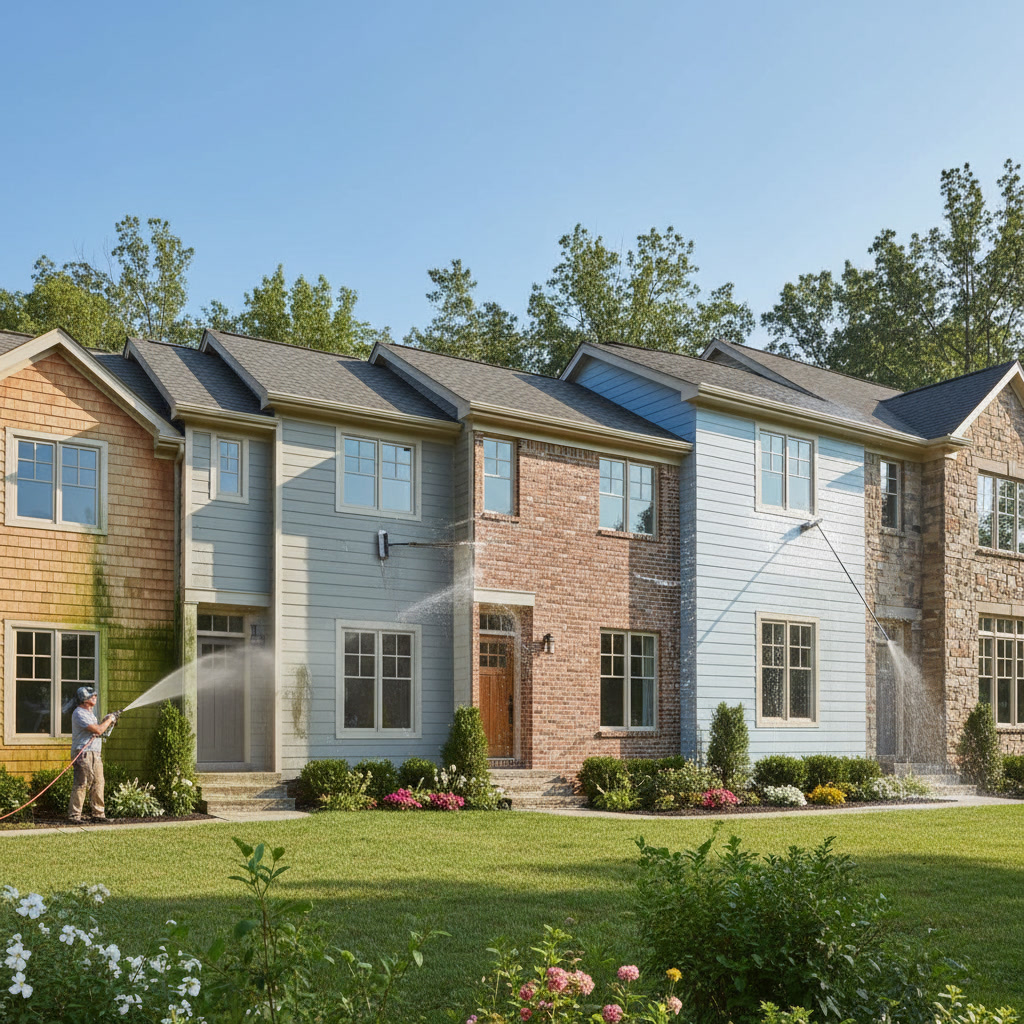
Understanding how damage progresses helps you recognize when intervention becomes critical. Stage one involves invisible contamination where dirt, spores, and pollutants land on surfaces but show no visible effects yet. Chemical damage begins immediately, but most homeowners do not notice anything wrong.
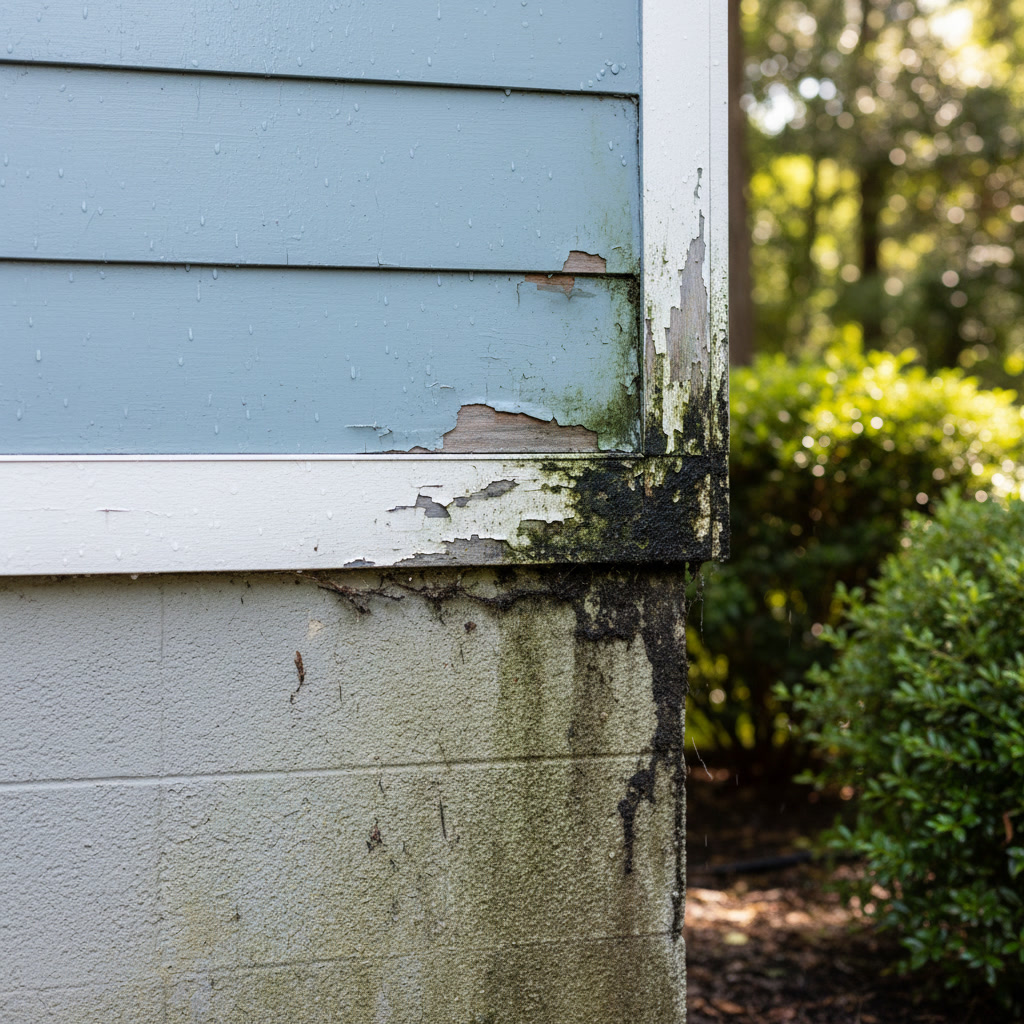
Stage two brings visible discoloration. Algae creates green or black streaks, mold appears as dark patches, and general grime makes surfaces look dull. Paint adhesion has already weakened by this point, though the surface still feels solid to the touch.
Stage three shows chalking and texture changes. Running your hand across the surface leaves a powdery residue. The paint’s binder has broken down significantly, and the pigment particles are no longer held firmly in place. Water absorption increases dramatically at this stage.
Stage four involves flaking, peeling, and cracking. The paint has lost adhesion to the substrate and begins lifting away. Moisture penetrates behind the paint, causing further delamination. Cleaning at this stage cannot reverse the damage, and repainting becomes necessary.
Stage five represents complete failure. Bare substrate shows through in multiple areas, wood begins rotting, and siding materials themselves start deteriorating. The cost to repair damage at this stage often runs five to ten times higher than the cost of preventive cleaning would have been.
Real-World Cost Comparison Between Regular Cleaning and Premature Repainting
A typical home exterior cleaning service costs between $300 and $800 depending on home size and condition. Having this service performed every 12 to 18 months costs roughly $2,000 to $3,000 over a ten-year period.
Repainting the same home costs between $5,000 and $15,000 depending on size, prep work required, and paint quality. Without regular cleaning, most homes need repainting every five to seven years. With proper cleaning, that interval extends to ten to 15 years or more.
Over a 20-year period, a homeowner who invests in regular cleaning might spend $4,000 on cleaning and $8,000 on one paint job, totaling $12,000. A homeowner who skips cleaning might spend $25,000 to $30,000 on three or four paint jobs. The difference of $13,000 to $18,000 represents real money saved simply by maintaining clean surfaces.
These numbers do not account for the additional costs of siding repair or replacement when deterioration reaches advanced stages. Replacing damaged wood siding, repairing rotted trim, or replacing sections of vinyl can add thousands more to the expense.
How Often Your Home Needs Exterior Cleaning Based on Environmental Factors
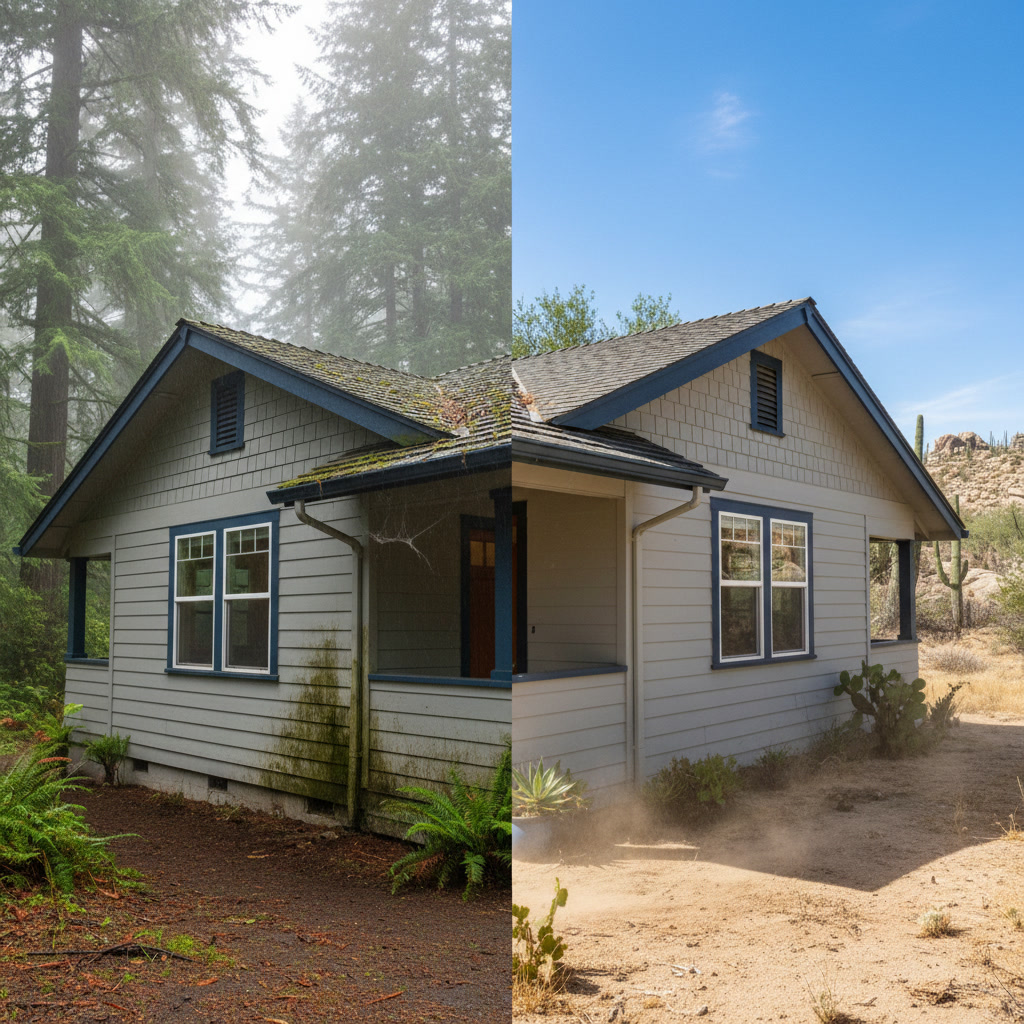
Coastal properties face the most aggressive contamination due to salt spray, high humidity, and airborne algae spores. Homes within two miles of the ocean typically need cleaning every 12 months to prevent rapid deterioration. The salt accelerates oxidation and corrosion while creating an ideal environment for biological growth.
Properties with significant tree coverage need more frequent attention. Shade keeps surfaces damp longer after rain, and falling leaves deposit organic matter that feeds mold and algae. Tree sap also bonds to paint and becomes increasingly difficult to remove as it ages. Homes surrounded by trees often need cleaning every 12 to 18 months.
Suburban homes in moderate climates with good sun exposure can often extend cleaning intervals to 18 to 24 months. The sun’s UV light naturally inhibits some biological growth, and better air circulation helps surfaces dry faster. However, even these properties still accumulate enough contamination to warrant regular attention.
Industrial areas or locations near highways need more frequent cleaning due to higher levels of particulate pollution. Carbon deposits from vehicle exhaust and industrial emissions bond strongly to painted surfaces and accelerate chemical breakdown. Annual cleaning becomes important in these environments.
The Best Time of Year to Schedule Preventive Exterior Cleaning
Spring offers the ideal window for cleaning in most climates. Winter leaves behind accumulated salt, dirt, and dormant biological growth that spring warmth will activate. Cleaning in April or May removes this contamination before it becomes active and allows your home to look its best throughout summer.
Fall cleaning also makes sense for homes that face heavy tree coverage. Removing fallen leaves, organic debris, and summer growth before winter prevents moisture from being trapped against surfaces during the cold months. This is particularly important for wood siding, where freeze-thaw cycles can drive trapped moisture deep into the material.
Summer cleaning works well for scheduling convenience, but surfaces should be cleaned when they are not in direct sunlight. Hot surfaces cause cleaning solutions to dry too quickly, reducing effectiveness and potentially leaving streaks. Early morning or late afternoon appointments work best during summer months.
Winter cleaning is possible in moderate climates where temperatures stay above 40 degrees consistently. Freezing temperatures can damage surfaces during the cleaning process and prevent cleaning solutions from working properly. Most professionals avoid winter work in cold climates for these reasons.
Why Pressure Settings Matter More Than Most Homeowners Realize
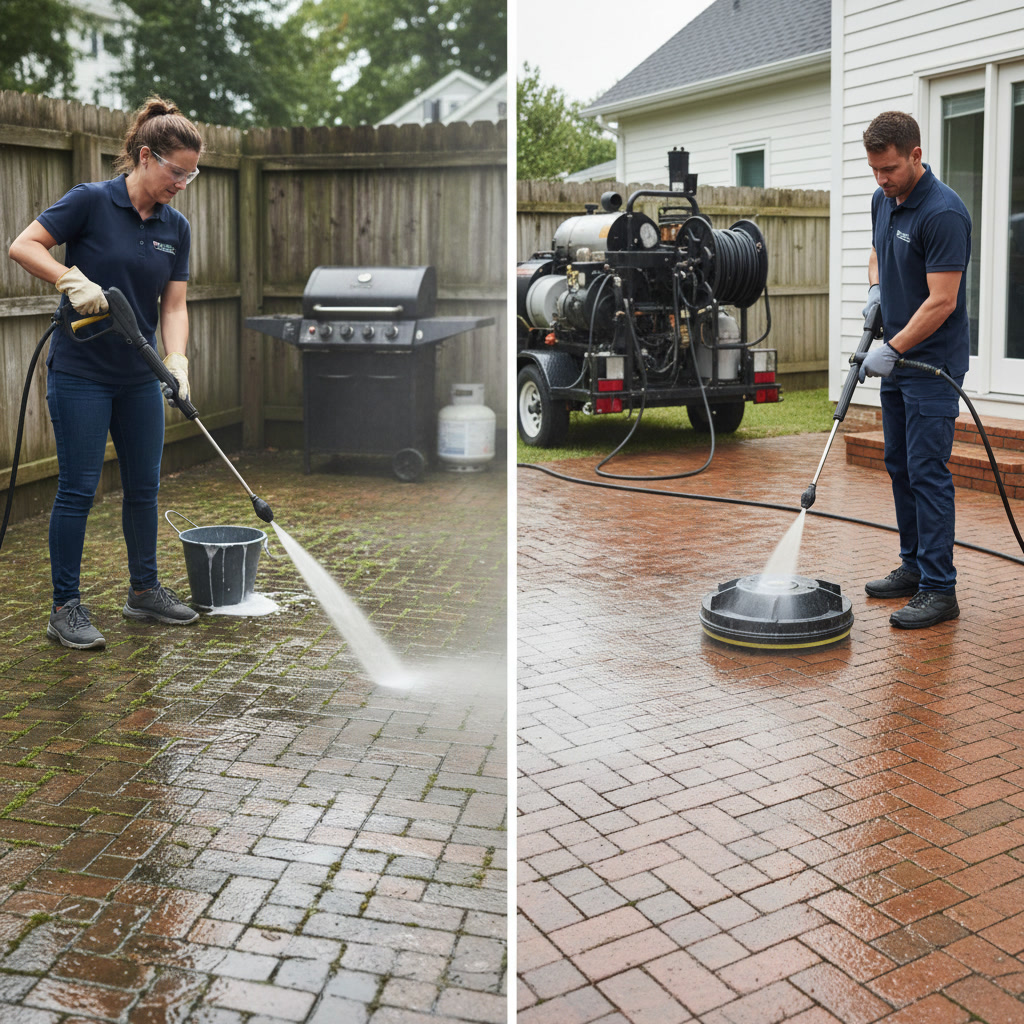
The difference between cleaning and damaging lies in pressure control. Standard power washing services use 1,500 to 3,000 PSI, but not every surface tolerates that pressure. Painted wood, vinyl siding, and stucco can be damaged by pressure above 1,500 PSI, while concrete and brick can handle much higher pressures safely.
Water pressure above the appropriate level drives moisture behind siding, strips paint, etches vinyl, and damages window seals. Homeowners using rental equipment often use too much pressure because higher pressure feels more effective. The damage may not become apparent for weeks or months, when paint begins peeling or water stains appear inside walls.
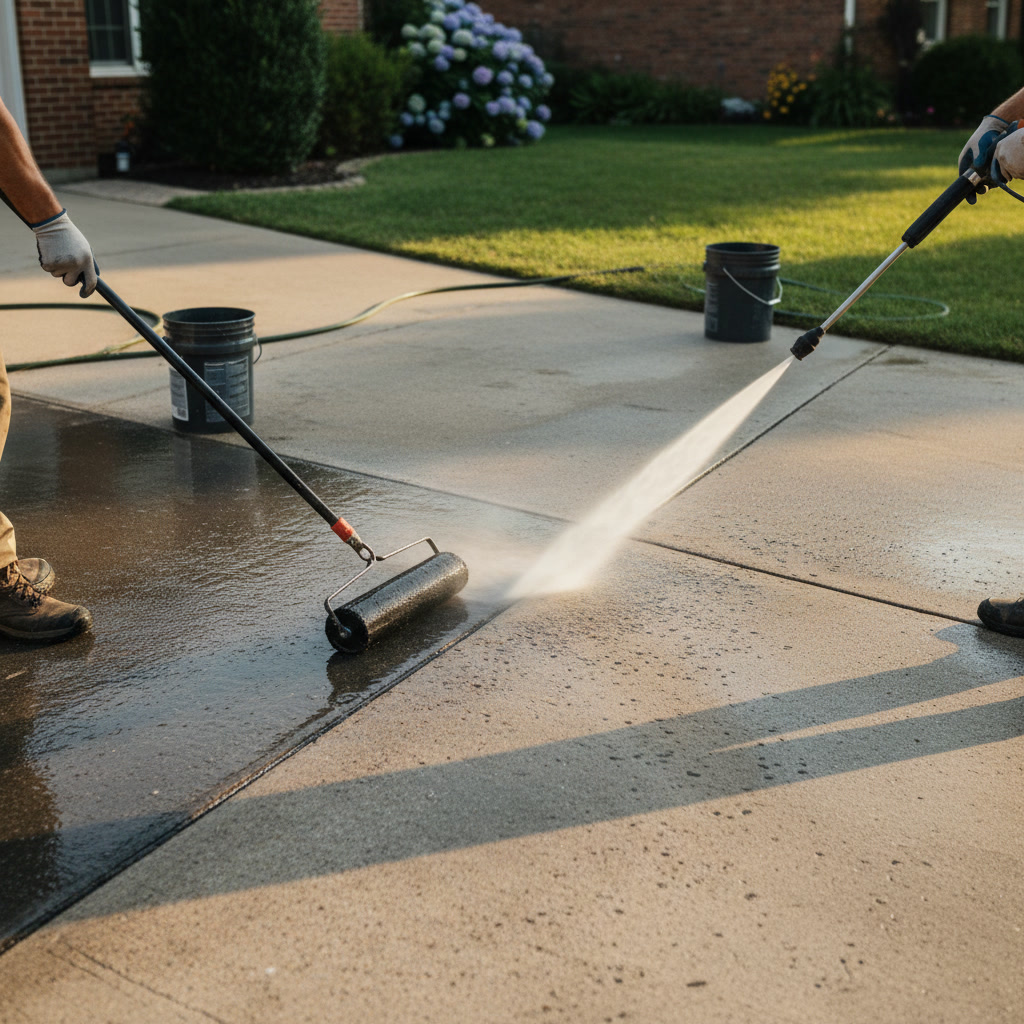
Professional equipment allows precise pressure adjustment for each surface type. An experienced technician varies pressure throughout the job, using higher pressure on durable concrete foundations and lower pressure on painted trim and siding. This precision prevents damage while still achieving thorough cleaning.
Nozzle selection also plays a critical role. A zero-degree nozzle concentrates water into a cutting stream that can damage any surface. A 25 to 40-degree nozzle spreads the water over a wider area, reducing pressure at any single point. Using the wrong nozzle with the correct pressure setting can still cause damage.
What Happens When You Delay Exterior Cleaning Too Long
Delayed cleaning allows biological growth to establish deep root systems in paint and siding pores. At this stage, surface cleaning removes the visible growth but leaves roots behind. These roots continue causing damage and allow rapid regrowth, sometimes within weeks of cleaning.
Staining becomes permanent when certain organisms penetrate below the paint surface. Black algae and some mold species produce pigments that soak into porous materials like wood and stucco. Once this happens, only repainting or refinishing can restore the original appearance.
Structural damage begins when moisture penetration reaches the substrate. Wood rot, insulation damage, and interior water staining can all result from exterior contamination that was ignored too long. At this point, you face repair costs that dwarf what preventive cleaning would have cost.
Many homeowners discover these problems only when preparing their home for sale. Buyers and inspectors spot deteriorated exteriors immediately, and the cosmetic issues often trigger closer inspection that reveals hidden structural problems. The resulting negotiations can cost sellers thousands in price reductions or required repairs.
Protecting Your Investment Through Simple Maintenance
Your home represents one of your largest financial investments, and the exterior finish serves as its primary defense against the elements. Regular cleaning maintains this defense system at a fraction of the cost of repairs and replacements. The difference between a home that looks 20 years old and one that looks nearly new often comes down to consistent exterior maintenance.
The science is clear: contaminants cause measurable chemical and biological damage to paint and siding materials. Removing these contaminants stops the damage process and dramatically extends the life of your protective finishes. Whether you choose annual or biennial cleaning depends on your specific environmental factors, but the investment always pays returns in extended material life and preserved home value.
JV Power Washing INC has helped Long Island homeowners protect their exterior investments for more than two decades. If your home shows the early warning signs of contamination buildup, taking action now prevents the exponential cost increases that come with delayed maintenance. Reach out to discuss your home’s specific needs and schedule a service that protects your investment for years to come at +16312868932.