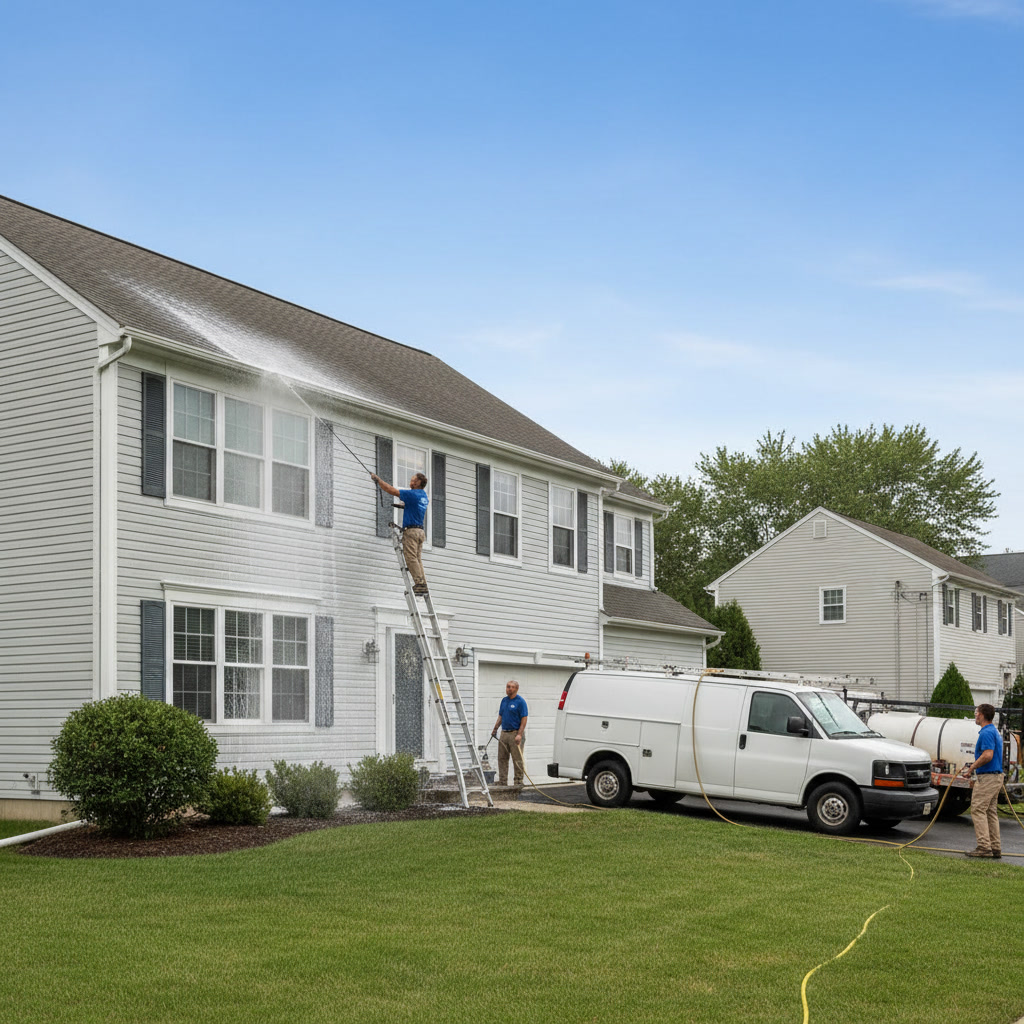
A professional pressure washing service begins with a thorough property inspection, followed by surface-specific preparation, application of cleaning solutions when needed, controlled washing at appropriate pressures, and a detailed final walkthrough to ensure complete satisfaction. Most residential jobs take between two to four hours depending on property size and the scope of work. Understanding each phase helps homeowners know exactly what to expect and why professional results consistently outperform DIY attempts.
Why Professional Cleaning Differs from DIY Attempts
The gap between amateur and professional exterior cleaning comes down to equipment knowledge, technique, and experience. A typical homeowner rental unit delivers 2,000 to 3,000 PSI with limited flow control. Professional equipment offers variable pressure settings, multiple nozzle options, heated water capability, and specialized chemical injectors that adjust dilution ratios automatically.
More importantly, knowing which surfaces require high pressure and which need soft washing prevents costly damage. Cedar siding, asphalt shingles, and painted wood all require different approaches. A single wrong nozzle choice can etch concrete, strip paint, or drive water behind siding and create mold problems that cost thousands to remediate.
The Initial Property Assessment
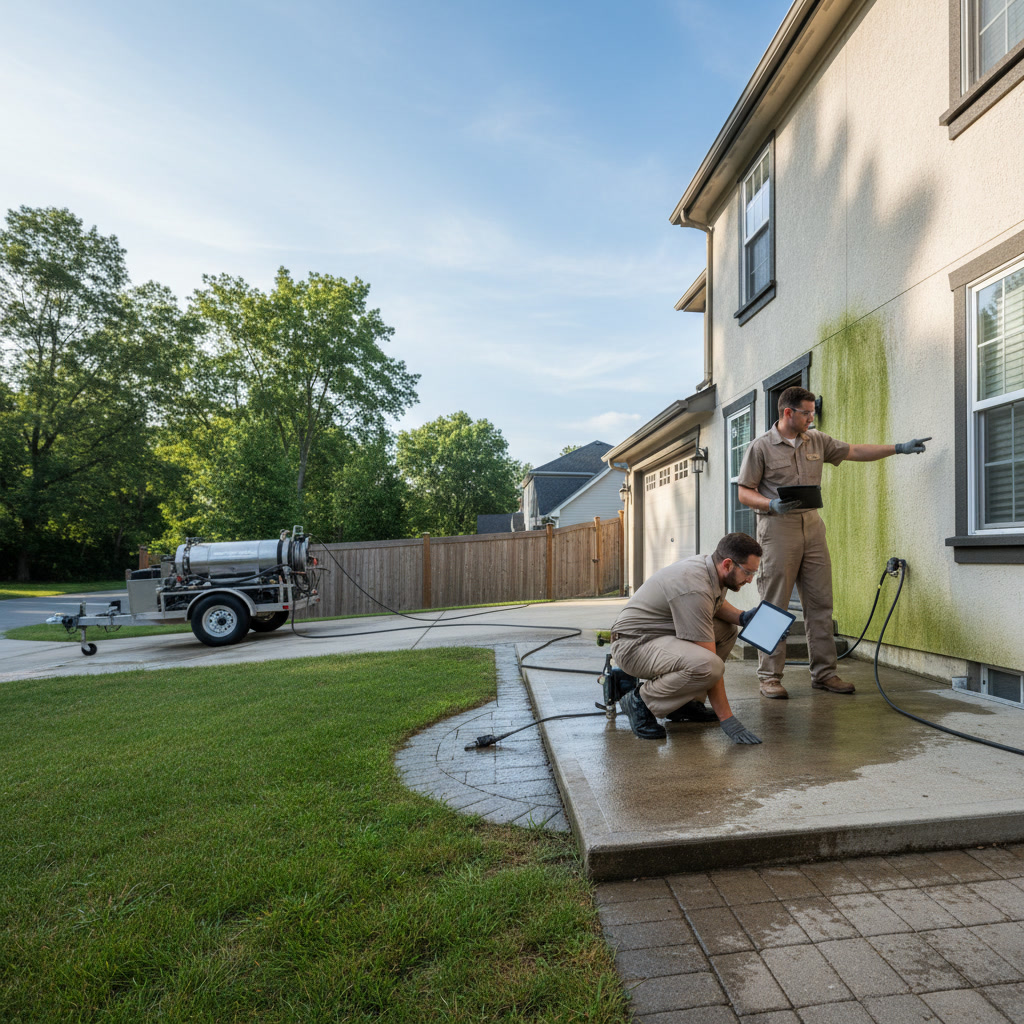
Before any water flows, trained technicians walk the entire property to identify surface types, problem areas, and potential obstacles. They note vegetation that needs protection, check for loose siding or trim, identify electrical fixtures, and look for existing damage that washing could worsen.
This inspection determines which cleaning methods suit each surface. Brick pavers around a pool need different treatment than stamped concrete driveways. Vinyl siding tolerates moderate pressure, while stucco requires gentler techniques. The assessment also reveals whether mold, mildew, oil stains, or oxidation require pre-treatment with specialized solutions.
Pre-Cleaning Preparation and Protection
Preparation makes the difference between a clean surface and a clean property. Technicians close all windows and doors, cover electrical outlets and light fixtures, and move outdoor furniture and planters away from work areas. Delicate plants near the house get pre-watered to saturate root zones and covered with tarps to prevent chemical exposure.
Garden hoses connect to available water sources, and equipment gets positioned strategically to minimize hose runs across landscaping. For two-story homes, extension wands and specialized tips allow ground-level cleaning without ladders in most cases. Any areas the homeowner wants avoided, like freshly painted trim or new window caulking, get marked during this phase.
Surface-Specific Chemical Application
Not every job requires chemicals, but organic stains, mold, mildew, and algae respond far better to proper pre-treatment than pressure alone. Professional-grade cleaners include surfactants that break molecular bonds between contaminants and surfaces, making removal faster and more complete while requiring less pressure.
Application happens from bottom to top to prevent streaking, and solutions typically dwell for five to fifteen minutes depending on formulation and stain severity. Eco-friendly biodegradable options work effectively for most residential applications. Heavily soiled areas like garage floors with oil stains or dumpster pads may need industrial degreasers. The key difference from store-bought products is concentration control and proper dilution ratios that maximize effectiveness without damaging surfaces or harming landscaping.
The Washing Process in Patchogue Properties
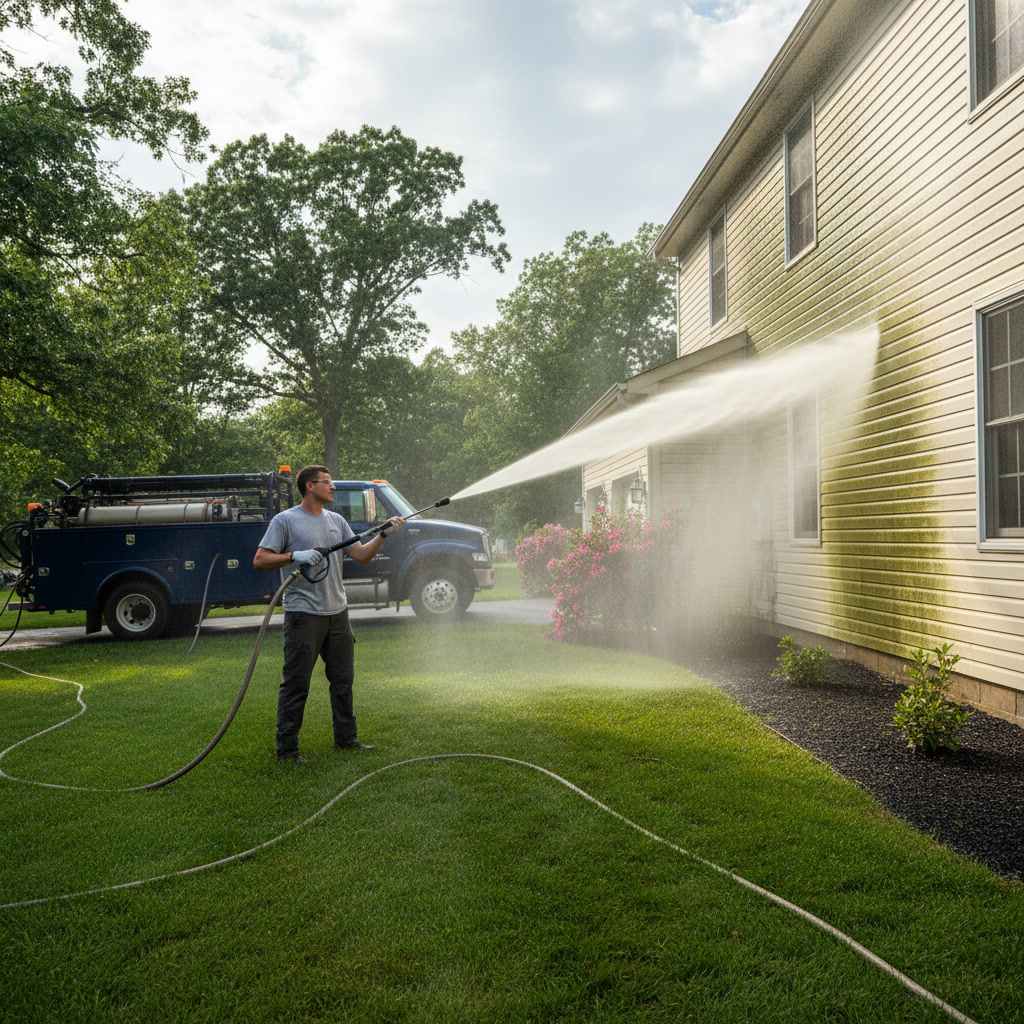
Actual washing begins at the top and works downward, allowing dirty runoff to flow over areas still awaiting cleaning rather than re-soiling finished sections. For home exteriors, this means starting with soffits and fascia, then moving to siding, and finishing with foundation areas and sidewalks.
Nozzle distance and angle matter enormously. Technicians typically hold the wand 12 to 18 inches from surfaces, adjusting based on material hardness and soil level. Overlapping passes ensure complete coverage without streaks. Corners, seams, and textured areas get extra attention since contaminants hide in crevices.
For exterior cleaning services involving multiple surfaces, professionals switch between pressure settings and nozzles dozens of times during a single job. A 40-degree fan tip works well for siding, while a rotating turbo nozzle strips years of grime from concrete in half the time of standard tips.
Pressure Settings and Technique Variations
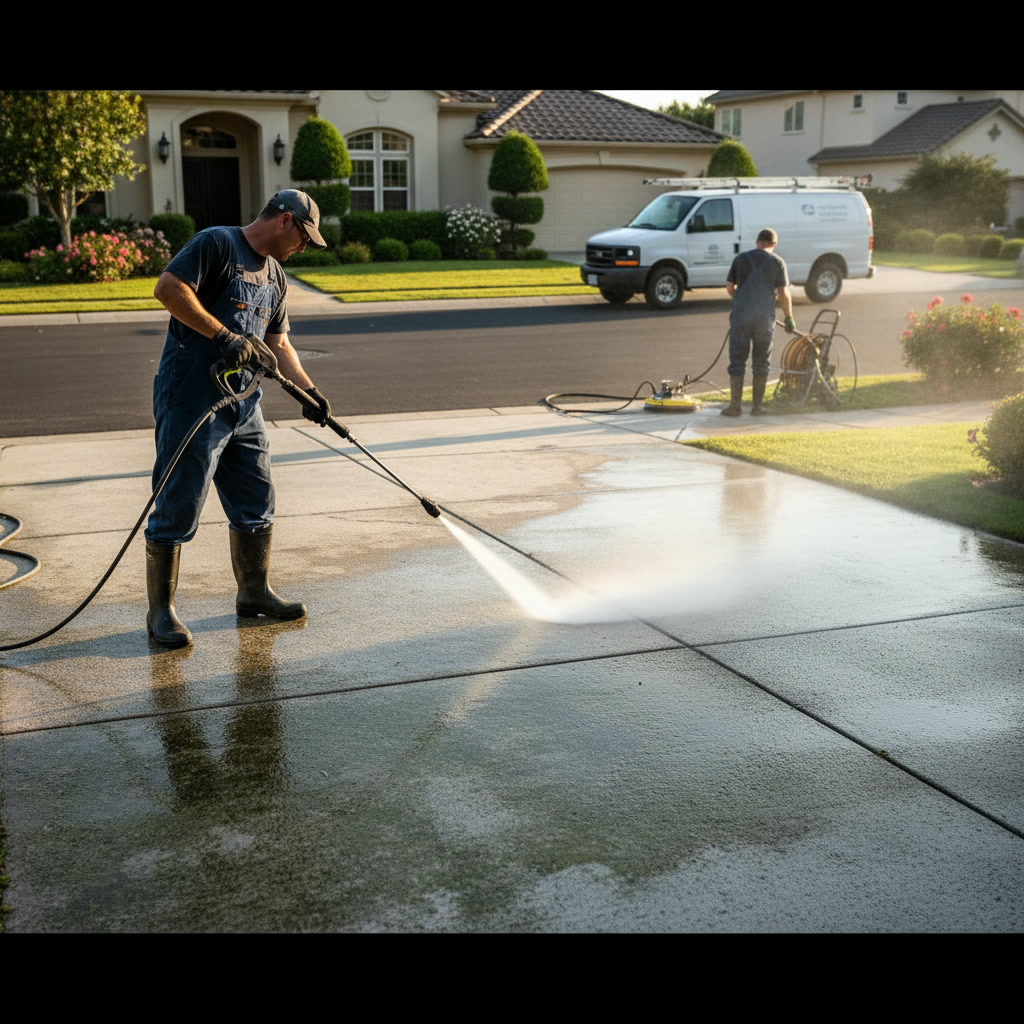
Wood decks receive 500 to 600 PSI to avoid splintering and fuzzing the grain. Vinyl siding handles 1,200 to 1,500 PSI safely when held at the correct angle. Concrete driveways tolerate 3,000 PSI or more, especially when removing oil stains or tire marks. These numbers mean nothing without proper technique, which is why experience matters.
Water temperature also plays a role often overlooked in DIY jobs. Heated water between 180 and 200 degrees cuts grease and organic growth far more effectively than cold water, reducing both pressure requirements and cleaning time. Hot water washing costs more but delivers superior results on heavily soiled commercial equipment, fleet vehicles, and industrial surfaces.
Handling Stubborn Stains and Problem Areas
Rust stains from lawn furniture, black mold in shaded areas, and efflorescence on brick all require targeted approaches beyond standard washing. Rust removers containing oxalic acid dissolve iron oxide without etching surrounding surfaces. Sodium hypochlorite solutions kill mold at the root rather than just washing away surface growth.
Chewing gum, tar, and adhesive residues need solvent-based treatments before pressure application. The key is identifying the stain type correctly. Using acid-based cleaners on certain stone types causes permanent damage, while alkaline degreasers etch aluminum. Professional knowledge prevents these mistakes that turn cleaning projects into repair nightmares.
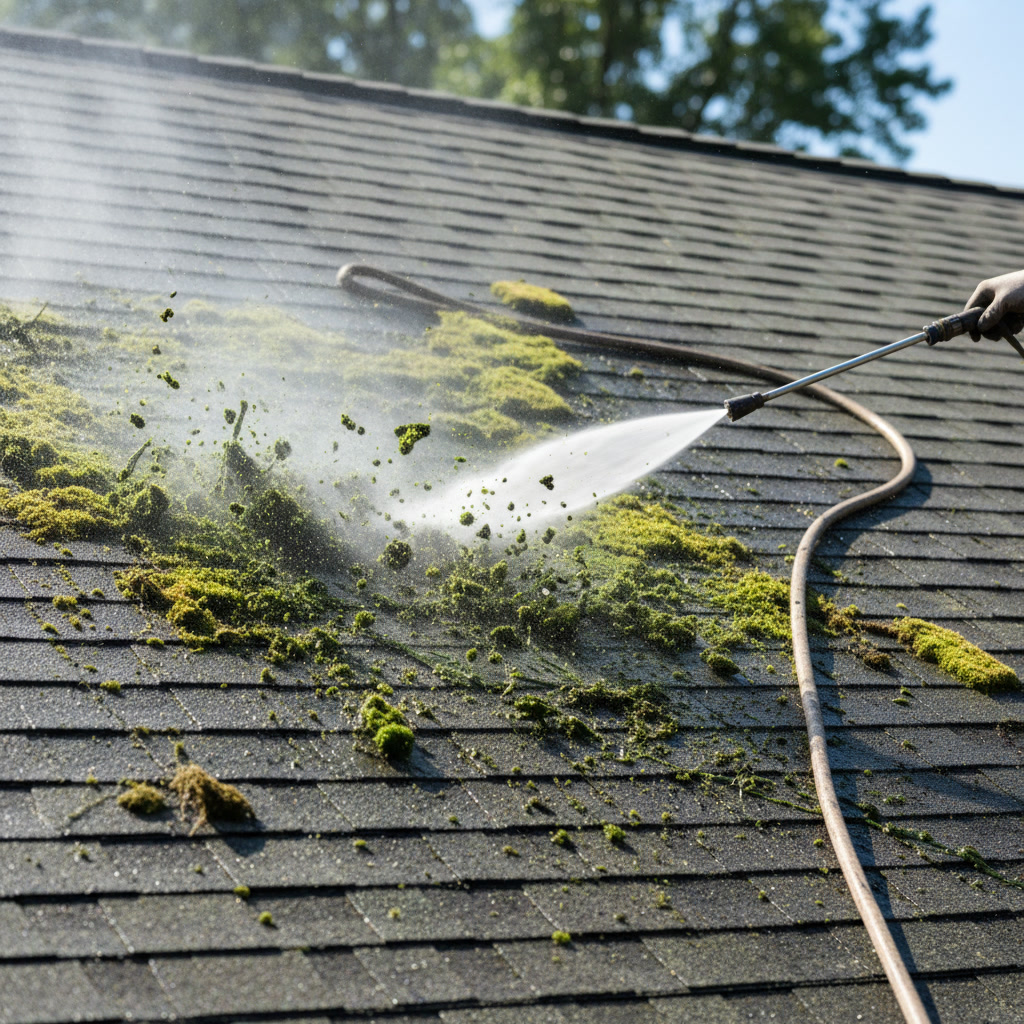
In cases where pressure alone risks damage, technicians employ soft washing techniques that rely on chemical action rather than force. This approach excels on roofs, painted surfaces, and older materials where high pressure could cause more harm than good. Understanding when to choose this method separates experienced providers from those who simply blast everything at maximum pressure.
Post-Wash Rinsing and Detail Work
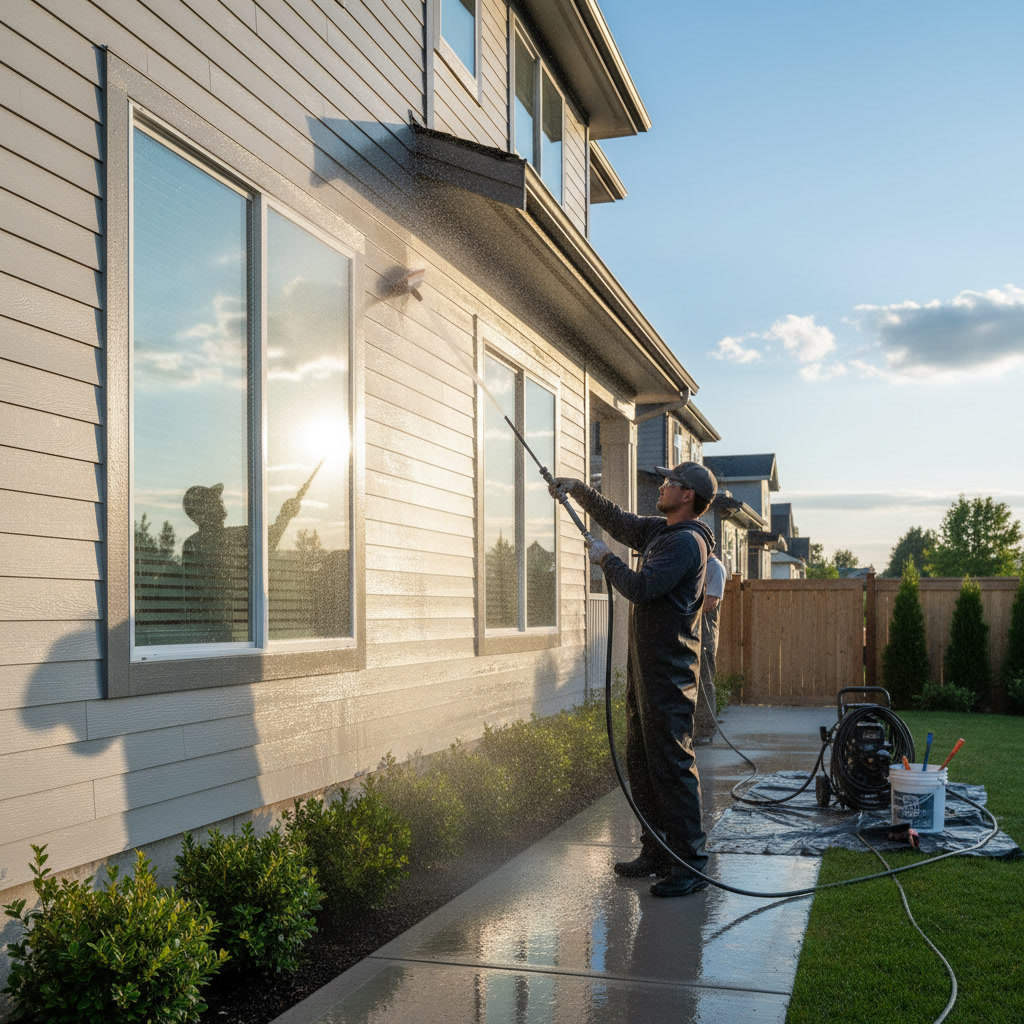
After the main washing, a thorough rinse removes all chemical residue and loosened contaminants. This step uses lower pressure and fresh water, working from top to bottom again to ensure nothing remains that could attract dirt or harm plants. Windows get a final rinse to remove any overspray, and foundation plantings receive extra water to dilute any cleaning solution that may have reached the soil.
Detail work includes hand-scrubbing corners that equipment cannot reach effectively, cleaning window tracks and door thresholds, and addressing any spots the initial pass missed. Light fixtures get wiped down, and any moved items return to their original positions. This attention to finishing details transforms a job from merely clean to professionally complete.
Step-by-Step Quality Inspection Process
Before calling the job complete, technicians conduct a systematic quality check that covers six key areas:
- Surface cleanliness: walking the entire property to verify uniform results with no streaks, missed spots, or chemical residue
- Surrounding areas: confirming all landscaping, fixtures, and outdoor items remain undamaged and properly positioned
- Water drainage: checking that washing has not created standing water or drainage issues
- Access points: ensuring doors, windows, vents, and utilities are secure and functional
- Cleanup: removing any debris stirred up during washing and clearing work areas completely
- Problem documentation: photographing any pre-existing damage noted during initial inspection for homeowner records
This methodical approach catches issues immediately when they are easiest to address rather than after the crew has left and equipment is packed.
What to Expect After the Service
Surfaces dry within a few hours under normal conditions, though shaded areas and textured materials may take longer. The full impact of cleaning often becomes more apparent once everything dries completely, as water darkens many materials temporarily. Colors appear brighter, and the overall appearance improves dramatically compared to pre-cleaning conditions.
Some organic stains like deep-set mold may show improvement immediately but continue fading over the following week as treatment solutions complete their work. This delayed effect is normal and expected with biological contaminants. For homeowners considering selling, the impact on curb appeal provides immediate returns that justify the investment.
Most residential properties benefit from annual cleaning to prevent buildup that becomes progressively harder to remove. High-traffic areas like walkways and driveways may need attention twice yearly. Establishing a regular schedule prevents the heavy contamination that requires aggressive treatment and keeps properties looking their best year-round.
Professional Service Delivers Lasting Results
The difference between a quick DIY rinse and professional exterior cleaning comes down to proper technique, appropriate equipment, and experience-based decision making at every step. From accurate surface assessment through final inspection, each phase contributes to results that enhance property appearance, prevent damage, and deliver value that lasts.
Understanding this process helps property owners recognize why professional services consistently outperform amateur attempts. The investment protects your most valuable asset while saving the time, physical effort, and potential repair costs that come with incorrect DIY approaches.
JV Power Washing INC brings over 20 years of family-owned expertise to every project, combining professional-grade equipment with the knowledge to use it correctly on any surface. Whether your property needs a complete exterior refresh or targeted cleaning for specific problem areas, our licensed and insured team delivers the meticulous attention to detail that earns five-star ratings. Call +16312868932 to schedule your property assessment and experience the difference that professional cleaning makes.