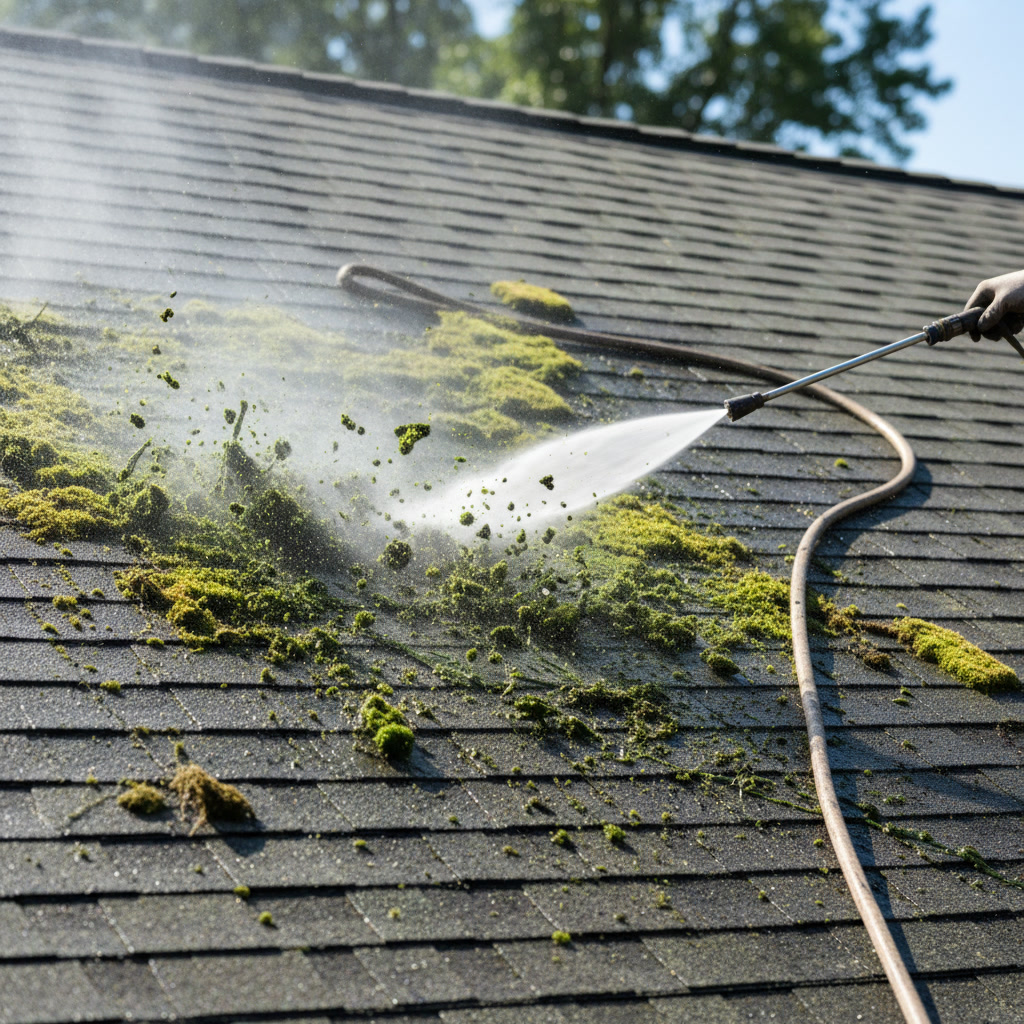
Dark streaks running down your shingles or thick green patches spreading across your roof are warning signs that moss and algae have taken hold. These organisms don’t just make your home look neglected. They actively damage roofing materials, retain moisture, and can shorten your roof’s lifespan by years. Understanding why roof moss algae removal matters and how professional soft washing techniques eliminate these problems helps you protect one of your home’s biggest investments.
Homeowners across Long Island, from Patchogue to Brookhaven, deal with these roofing invaders thanks to our humid coastal climate. The combination of moisture, shade, and organic debris creates perfect conditions for moss and algae to flourish on shingles.
What Causes Moss and Algae to Grow on Roofs
Moss and algae aren’t the same organism, but they both love the same conditions. Algae are simple, single-celled organisms that appear as dark streaks or stains, usually black or dark green. The most common culprit on roofs is Gloeocapsa magma, a type of cyanobacteria that feeds on the limestone filler in asphalt shingles.
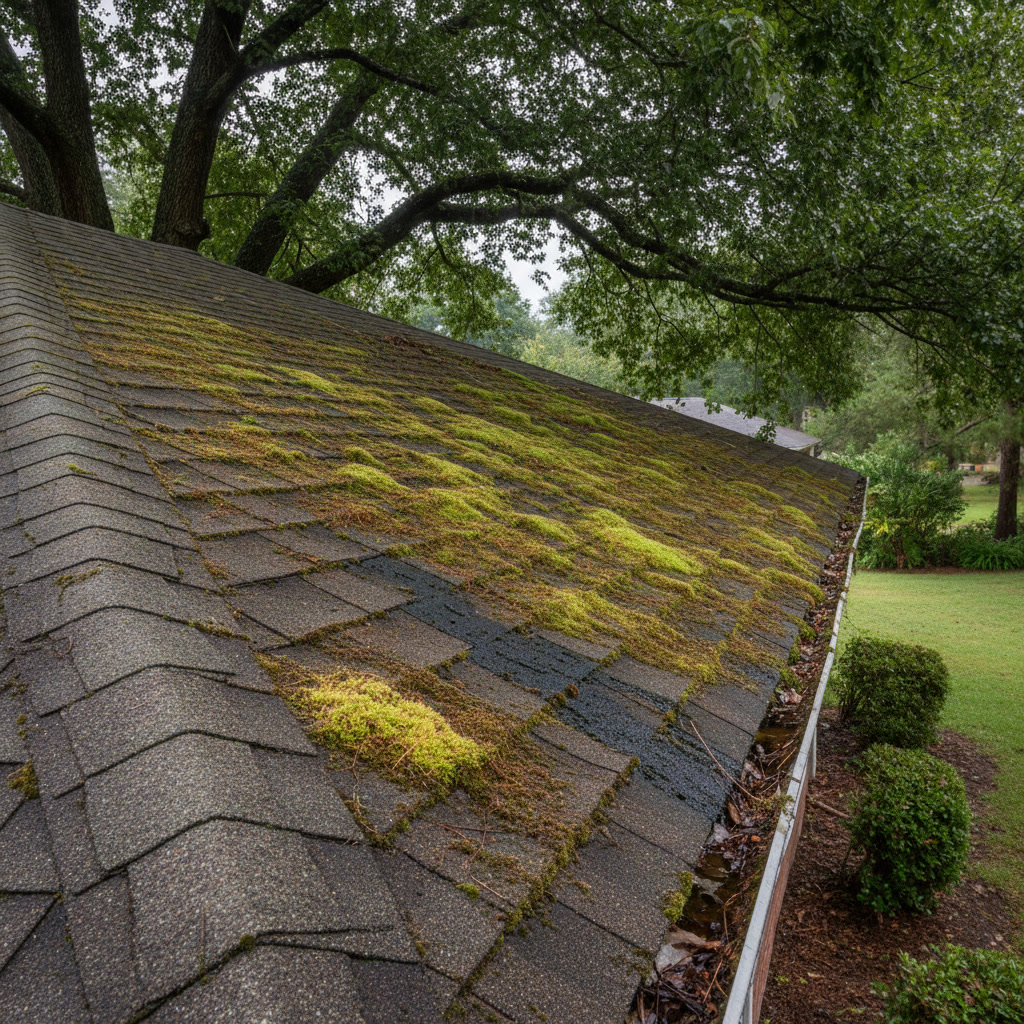
Moss is a more complex plant that creates thick, spongy mats. It sends root-like structures called rhizoids underneath shingle edges, physically lifting and separating them from the roof deck.
Several factors encourage both to colonize your roof. Shade from overhanging trees keeps shingles damp longer after rain or dew. North-facing roof slopes that receive less direct sunlight stay cooler and moister throughout the day. Debris like leaves, pine needles, and twigs trap moisture and provide nutrients.
Humidity levels also play a major role. Long Island’s coastal climate means morning dew and moisture from the surrounding ocean provide consistent dampness that moss and algae need to thrive. Even homes without nearby trees can develop algae growth because the spores travel through the air and settle wherever conditions are right.
How Moss and Algae Damage Your Roof
The aesthetic impact is obvious, but the structural damage is what costs homeowners thousands in premature roof replacement. Algae retain moisture against the shingle surface. This constant dampness accelerates the breakdown of asphalt and causes granule loss. Granules are the protective layer on shingles that shields them from UV rays and weather.
Once granules wash away, shingles deteriorate rapidly. You’ll see bald spots where the underlying mat is exposed. These areas become brittle and crack easily, leading to leaks.
Moss causes even more aggressive damage. As moss grows, its rhizoids burrow under shingle edges and tabs. This lifts shingles away from the roof, creating gaps where wind-driven rain can penetrate. Water gets under the shingles and soaks the underlayment and roof deck.
Repeated freeze-thaw cycles make things worse. Moss holds water like a sponge. When temperatures drop, that water freezes and expands, pushing shingles further apart. Spring thaws bring more moisture penetration, wood rot, and potential interior leaks.
The dark staining from algae also increases heat absorption. Black streaks make your roof hotter in summer, which can raise cooling costs and further degrade shingle materials through thermal cycling.
Why Traditional Pressure Washing Damages Roofs
Many homeowners make the mistake of attacking roof stains with high-pressure washing equipment. Standard power washing services use water pressure between 2,500 and 4,000 PSI to blast away dirt and grime from concrete and siding.
That same pressure destroys asphalt shingles. The force strips away protective granules, tears shingle edges, and drives water underneath roofing materials. A single pressure washing session can remove years of remaining lifespan from your roof. You might get a temporarily clean look, but you’ve actually accelerated the need for expensive replacement.
Insurance companies and roofing manufacturers warn against pressure washing roofs for these exact reasons. Warranty coverage often becomes void if pressure washing causes damage.
How Soft Washing Works for Roof Moss Algae Removal
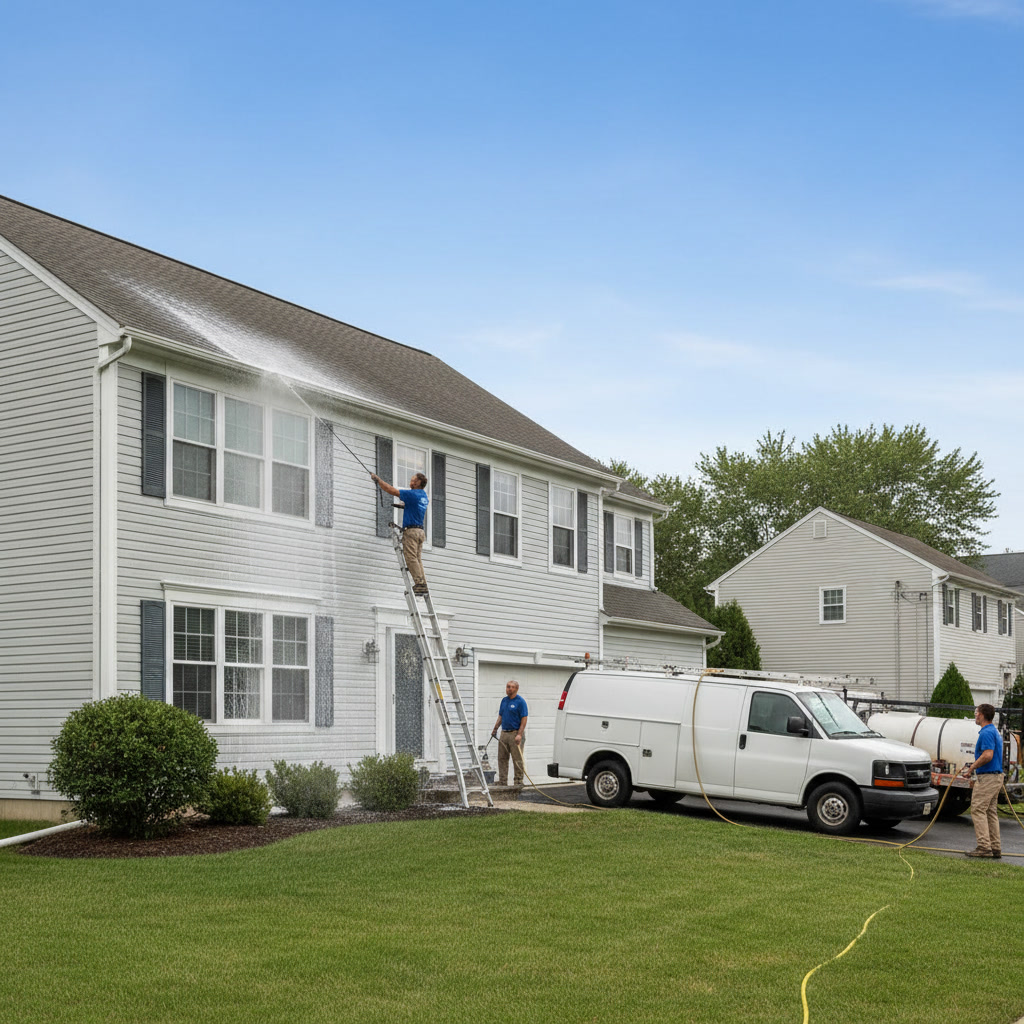
Soft washing is the safe, effective alternative that professional exterior cleaning services use for roofs. Instead of relying on high pressure, soft washing uses specialized cleaning solutions applied at low pressure, typically under 500 PSI, roughly equivalent to a garden hose with a spray nozzle.
The cleaning solution does the heavy lifting. Professional formulas combine surfactants, algaecides, and fungicides that kill moss, algae, lichen, and bacteria at the root level. These solutions break down the organisms and their protective biofilm, allowing them to be rinsed away gently.
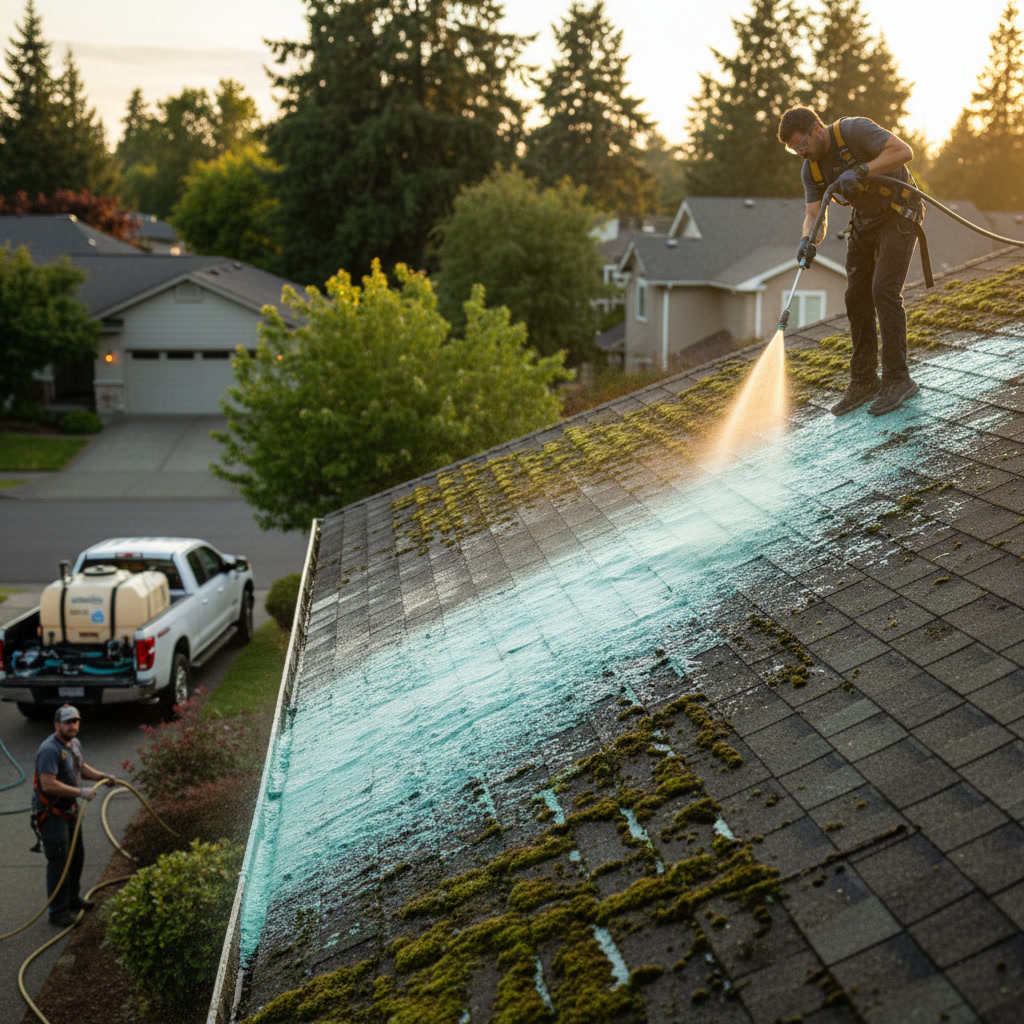
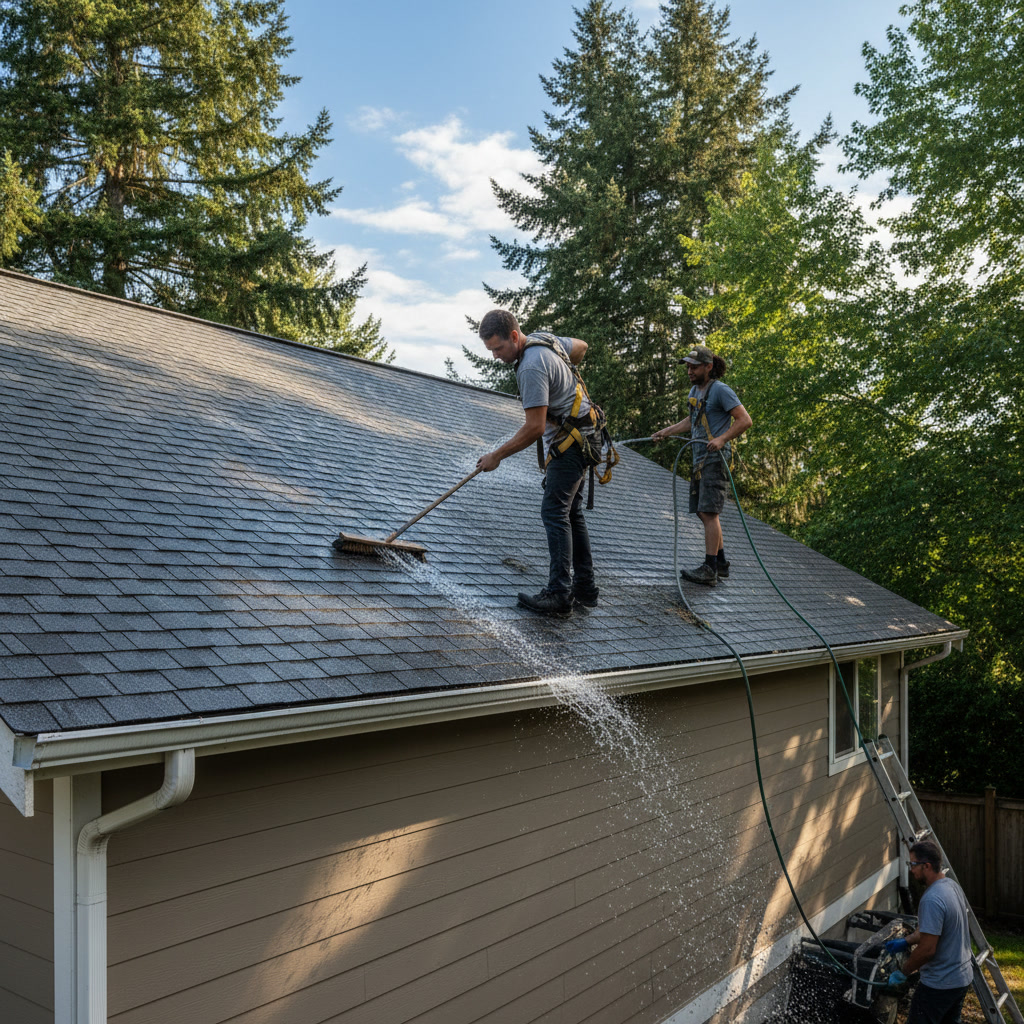
The process starts with a thorough inspection to identify problem areas and check for any existing roof damage. Surrounding landscaping gets protected with tarps or pre-wetting to prevent any solution contact. The cleaning solution is then applied evenly across affected areas using specialized low-pressure equipment.
Dwell time matters. The solution needs 15 to 20 minutes to penetrate moss and algae colonies and kill them completely. After proper dwell time, a gentle rinse removes dead organisms, staining, and residue. The roof is left clean without any damage to shingles, flashing, or gutters.
Long-Term Protection Benefits
One major advantage of soft washing over pressure washing is the residual protection. Quality cleaning solutions leave behind a protective barrier that inhibits new growth for months or even years.
Moss and algae don’t just disappear after application. The solution continues working after the initial treatment. Dead moss loosens over the following weeks and washes away naturally with rain. Algae staining fades as dead cells break down and rinse off.
Most professional roof cleaning services recommend treatment every two to three years depending on environmental factors. Homes with heavy tree coverage might benefit from more frequent maintenance, while those in full sun can go longer between treatments.
Pro Tip: Schedule roof moss algae removal in spring or fall when temperatures are moderate and you have a few days of dry weather in the forecast. This gives the cleaning solution optimal conditions to work and rinse completely.
DIY vs. Professional Roof Moss Algae Removal
Home improvement stores sell roof cleaning products and equipment rentals, tempting some homeowners to tackle moss and algae removal themselves. While DIY is possible, several factors make professional service the smarter choice for most situations.
Safety is the primary concern. Roof work is dangerous. According to the CDC, falls from roofs cause thousands of serious injuries and hundreds of deaths each year among homeowners and professionals. Walking on a moss-covered or algae-slicked roof multiplies that danger significantly.
Product selection and application technique also matter more than most people realize. Store-bought cleaners often lack the professional-grade formulations needed for thorough removal. Application methods, dilution ratios, dwell times, and rinsing techniques all affect results and safety.
Using the wrong products can damage plants, stain siding, corrode metal components, or fail to kill moss and algae completely. Incomplete treatment means regrowth happens quickly, wasting your time and money.
Professional services like those offered throughout Medford and surrounding communities bring commercial-grade equipment, proper insurance coverage, years of experience, and guaranteed results. The cost difference between DIY attempts and professional service is often smaller than homeowners expect, especially when you factor in equipment rental, product purchases, and the value of your time.
Maintaining Your Roof After Moss Algae Removal
Professional roof cleaning delivers impressive results, but maintenance helps you protect that investment and extend the time between treatments. Simple preventive measures make your roof less hospitable to moss and algae growth.
Trim back overhanging branches to increase sunlight exposure and improve air circulation. Even removing branches that are three to four feet from the roof makes a difference. More sunlight and airflow mean faster drying after rain and dew.
Keep gutters clean and flowing freely. Clogged gutters overflow onto the roof edge, creating constant moisture along the eaves where moss loves to start growing. Regular gutter maintenance, ideally twice per year, prevents this problem.
Remove debris promptly. After storms or during fall when leaves drop, use a roof rake or leaf blower to clear off accumulation. Debris traps moisture and provides nutrients that feed moss and algae.
Consider zinc or copper strips. Installing these metal strips near the roof ridge releases ions when it rains that inhibit moss and algae growth on the shingles below. While not foolproof, they provide an extra layer of protection for homes prone to heavy growth.
Regular inspections help you catch problems early. Check your roof from the ground at least twice per year, looking for dark streaks, green patches, or lifted shingles. Early treatment prevents minor growth from becoming a major problem.
Cost Factors for Roof Moss Algae Removal
Pricing for professional roof cleaning varies based on several factors. Understanding these helps you budget appropriately and evaluate quotes from different companies.
Roof size is the primary cost driver. Companies typically charge by square footage, with prices ranging from 20 cents to 75 cents per square foot depending on the severity of growth and roof accessibility. A typical 2,000 square foot roof might cost between 400 and 1,200 dollars for complete treatment.
Roof pitch and complexity affect pricing. Steeper roofs require more safety equipment and take longer to clean safely. Multiple levels, dormers, skylights, and other features add time and difficulty. Single-story homes with simple roof lines cost less than multi-story houses with complex architectural details.
The extent of moss and algae coverage influences cost. Light staining from algae is quicker to treat than heavy moss buildup that requires extra dwell time and multiple applications. Severely neglected roofs might need additional treatments spaced weeks apart.
Location plays a role too. Service calls to more distant areas might include travel charges. Homes in densely developed neighborhoods where setup is straightforward typically cost less than remote properties requiring special access arrangements.
When comparing the cost of roof cleaning to premature roof replacement, the value becomes clear. A complete roof replacement on a typical Long Island home costs between 8,000 and 15,000 dollars or more. Investing a few hundred dollars every few years in preventive cleaning extends your existing roof’s lifespan significantly.
If you’re concerned about overall property appearance and value, services like curb appeal pressure washing can complement roof cleaning to maximize your home’s visual impact.
Frequently Asked Questions
How long does soft washing keep moss and algae from coming back?
Professional soft washing typically prevents regrowth for two to three years depending on environmental conditions. Homes with heavy shade and moisture may see regrowth sooner, while those in full sun with good drainage can go longer between treatments. The residual protection in quality cleaning solutions continues inhibiting new spore colonization for months after application.
Can moss and algae growth void my roof warranty?
Most roofing manufacturers require proper maintenance as a condition of warranty coverage. Allowing moss to grow unchecked and cause damage can be considered neglect that voids warranty protection. However, using improper cleaning methods like high-pressure washing can also void warranties. Always use approved soft washing techniques and keep records of professional maintenance.
Is soft washing safe for all types of roofing materials?
Soft washing is safe for asphalt shingles, metal roofing, tile, and most other residential roofing materials when performed correctly. The low-pressure application and proper cleaning solutions won’t damage roofing materials, but will effectively eliminate moss, algae, and staining. Cedar shake roofs require specialized treatment approaches. Always work with experienced professionals who understand the specific requirements of your roof type.
Will roof cleaning remove stains completely?
Most algae staining fades completely within weeks after soft washing treatment as dead cells break down and rinse away with rain. Extremely stubborn stains on older roofs might not disappear entirely if the algae has eaten into the shingle surface. Moss removal is immediately visible, though dead moss may take a few rain cycles to wash away completely. Overall, you should expect dramatic improvement with professional treatment.
Should I clean my roof before selling my home?
Yes. Roof staining from moss and algae significantly impacts curb appeal and perceived home value. Potential buyers often see a stained, moss-covered roof as a sign of poor maintenance and may negotiate lower offers or request roof replacement. Professional roof cleaning before listing delivers excellent return on investment and helps your home make a strong first impression.
Schedule Professional Roof Cleaning Today
Roof moss algae removal through professional soft washing protects your home’s structural integrity, extends your roof’s lifespan, and restores curb appeal without the damage caused by pressure washing. Regular maintenance every two to three years prevents small problems from becoming expensive replacements.
JV Power Washing INC provides expert soft washing services throughout Patchogue, Brookhaven, Sayville, and surrounding Long Island communities. With more than 20 years of experience, family ownership, and a five-star rating, we deliver the thorough, safe roof cleaning your home deserves. Our licensed and insured team uses professional-grade solutions and proven techniques that eliminate moss and algae while protecting your roofing investment.
Ready to restore your roof and protect your home? Call +16312868932 or visit our contact page to schedule your roof inspection and receive a detailed quote for soft washing services.